Wildflower City, a Garden Design Company in northern New Jersey

Hi Gang,

As many of you know, I love to share good news!  And this company, Wildflower City, is the best news ever!  They are genuine, caring, full of knowledge and experience, and doing great, hopeful, beautiful things in and with garden spaces in northern New Jersey.

I first met one of the principals, Kim Correro,  in April 2024 when she wanted to interview me for the Native Plant Society of New Jersey’s podcast, The WildStory: A Podcast of Poetry & Plants.  I was honest with Kim and shared that I’d never listened to a podcast, didn’t have a cell phone that could be used to listen to one, yada, yada, yada . . .  Kim persevered!  Jesse & Jack Connor came to my rescue.  They downloaded apps on my cell phone to enable me to join this century, gave me a tutorial, and I was off to the races.  I listened to a few of the WildStory Podcasts by Kim Correro and Ann Wallace and I was not only impressed, but hooked and honored that Kim and Ann wanted to interview me for Episode 16 (they just completed Episode 32).  Each episode is packed with priceless, thoughtful, and thought-provoking pearls of wisdom and information.

This spring Kim joined me in our wildlife garden as my garden helper.  She and a few others knew that my health and energy had ebbed during garden season.  Kim joined me for a lovely June day of garden work, companionship, and nature unfolding in our garden!  It was just what the doctor ordered.  Did I mention that Kim lives in Jersey City, not around the corner!  That is the kind of person Kim is.  Since then, my health is back and our wildlife garden has given me daily joy.  I am so grateful to Kim and other garden buddies who helped me whip it  into shape for 2026.

During Kim’s visit I was thrilled to learn about the business she and another woman started several years ago, Wildflower City.  And now I am excited to get the word out to you and anyone you can think of who might spread the word further for those living in northern New Jersey where Wildflower City is based.  Kim Correro, Lorraine Freeney, and Sima Kunttas, the Wildflower City Team, provided the following:

Wildflower City

Specializes in beautiful, sustainable, and wildlife-friendly garden designs for private yards (no matter how big or small) and open public spaces to support biologically diverse landscapes

KIM CORRERO
LORRAINE FREENEY

What makes Wildflower City unique is the belief that creating a native plant landscape should be accessible, educational, and achievable for everyone. Rather than expecting people to transform an entire property at once, ecological gardeners and educators, Kim Correro and Lorraine Freeney take a hands-on approach, working closely with homeowners and park directors throughout the process. They strive to help gardeners transition their landscapes thoughtfully, one section at a time, allowing projects to align with both budgets and comfort levels.

Kim and Lorraine curate a list of plants that are unique to each garden space, do the shopping, and arrange delivery! They work with a handful of trusted growers that do not use pesticides. Then, they don’t simply install plants and leave. They explain why native plants matter, how they support birds, pollinators, and local ecosystems, and how each plant contributes to the larger landscape. Whether someone is just beginning their native plant journey or already has a deep understanding of ecological gardening, Kim and Lorraine meet them where they are, providing guidance, education, and practical solutions tailored to their goals.

SIMA KUNTTAS

Serving Northern New Jersey since 2022, Wildflower City’s mission is to empower people to become confident stewards of their own landscapes while creating beautiful, resilient gardens that grow richer and more ecologically valuable with each passing season.

This year, residential architect and native plant designer Sima Kunttas joined the team, bringing her creative eye and deep knowledge of native plants to Wildflower City’s projects. Sima’s thoughtful approach to design and natural ability for problem-solving have been a wonderful addition, helping create landscapes that are both beautiful and ecologically functional.

Two inspiring examples of Wildflower City’s involvement in public green spaces are Imagine Garden in Secaucus and the Cora Hartshorn Arboretum in Short Hills

Cora Hartshorn Arboretum & Bird Sanctuary in Short Hills, NJ

“This year, Lorraine and I have worked closely with the team at Cora Hartshorn Arboretum & Bird Sanctuary to enhance pockets of the understory within its 16.45 acres of woodland,” said Kim Correro. “This is one of our newest collaborations, and we jumped at the opportunity to work with Director Tedor Whitman and Environmental Educator Wendi Mulvey. Their mission to sustain healthy habitat for wildlife while educating and connecting the community to the natural world is deeply aligned with the work we do at Wildflower City.”

This makes Cora Hartshorn Arboretum the perfect spot to launch Field Notes, Wildflower City’s new educational series bringing intimate, in-person conversations with experts in native plants, ecology, conservation, and land stewardship to local communities. The series is designed to bring trending topics and information to the public making native plant education accessible, practical, and inspiring.   In a separate post I’ve covered the 1st Field Notes presentation (on Container Gardening With Native Plants) HERE.

Imagine Garden in Secaucus, NJ

One of the most meaningful examples of Wildflower City’s work in a public space can be found at Imagine Garden in Secaucus, New Jersey.

Back in 2021, Imagine Garden was envisioned by Secaucus Mayor Mike Gonnelli and brought to life by the Environmental Department in partnership with co-leaders of the Hudson County Chapter of the Native Plant Society of New Jersey. Created as both a volunteer initiative and a Rutgers Environmental Steward capstone project, the garden brought together people with different areas of expertise and a shared commitment to transform the two-acre property into a thriving native habitat.

Knowing that a garden of this scale would need consistent care for years to come, the Town of Secaucus later asked Wildflower City to take on its ongoing maintenance and help develop educational programing for the community around the park.

Kim and Lorraine continue to work in Imagine Garden every week alongside Environmental Director Kimberly McCleary and her assistant Kaori Lemise, tending to the native plant berms and rain gardens, keeping invasive species in check, and observing the migrating birds and insects that find refuge there. They are often joined by corporate volunteer groups, student interns, local residents, and women in recovery from drug and alcohol addiction, who have found purpose, connection, and confidence through the experience of caring for the land.

To see some of the residential gardens and public spaces Wildflower City has created and continues to care for, follow Wildflower City on Instagram and on Facebook.

To learn more about future events, go to Wildflower City’s WEBSITE or follow them on Instagram and on Facebook.

Contact Wildflower City: info@wildflowercity.com

And remember to share this with all those in northern NJ you can think of who can benefit from and who can help spread the word about Wildflower City, a garden design company in northern NJ specializing in beautiful, sustainable, and wildlife-friendly garden designs for private yards (no matter how big or small) and open public spaces to support biologically diverse landscapes. I think we all agree that we NEED more of those spaces!

Thank you,
Pat

Container Gardening With Native Plants in Short Hills, NJ, Oct. 4th

Hi Gang,

How often have you been asked if there are natives that can survive and thrive in containers?  Many have only a small space to work with like a patio or a stoop or a balcony or a tiny urban garden.  These folks want to do their part and make a difference too.  Well, Wildflower City has addressed just that!


Wildflower City’s new fall and winter educational series, Field Notes, brings intimate, in-person conversations with experts in native plants, ecology, conservation, and land stewardship to local communities. The series is designed to bring trending topics and information to the public making native plant education accessible, practical, and inspiring.

Field Notes will be launched on Sunday, October 4, 2026, from 2 – 4 p.m.  at Cora Hartshorn Arboretum (324 Forest Drive S, Short Hills, NJ 07078) with the 1st in this series: “Container Gardening With Native Plants & Plant Sale.”  Join Kim Anello Correro and urban garden designer Sima Kunttas from Wildflower City for a hands-on look at native plants in containers and best practices for utilizing small space.  To be covered:

  • Design ideas for patios and stoops
  • How to choose the right containers
  • Native plants to attract butterflies, birds and beneficial insects
  • Leave with plants – following the presentation, Wildflower City will host a native plant sale!

Cost:  $25.  Register and learn full details at Wildflower City’s website HERE.

Thank you for helping to spread the word about this great opportunity to learn how to create wildlife-friendly habitat in often overlooked and underutilized spaces!

Pat

Pat Sutton’s FILM: “Monarchs Through the Seasons in her Wildlife Garden”

Hi Gang,

So sorry for this last minute alert! A week from today, I will present my Monarch film for CU Maurice River during one of their Campfire & Potlucks! Hope you can join me! Details follow:


“Monarchs Through the Seasons
in Pat Sutton’s Wildlife Garden”

Saturday, Sept. 26, 2026
6:00 p.m.

as part of CU Maurice River’s
Campfire & Potluck

WHERE:
Galetto Residence
Millville, NJ
(address will be sent to registrants)

COST:
$15.00 per person
To register & purchase tickets, click HERE
(or call CU Maurice River’s office: 856-300-5331)

BE PREPARED:
Participants should bring a favorite potluck dish to share,
a lawn chair or blanket, bug spray, and your sense of adventure
for an unforgettable evening of delicious food,
inspiring stories, & the magic of nature under the open sky!

This evening of nature, great food, and fellowship with CU Maurice River is hosted at the Galetto household, the home of CU Maurice River Board President Jane Galetto. The evening will bring together friends and members of the CU community for a delicious potluck dinner, campfire, and an immersive look at the wonders of the natural world.

The evening begins with a guided stroll through Jane Galetto’s native pollinator garden led by Pat Sutton, who will reveal how native plants create vibrant habitat for monarchs and other pollinators, birds, and other wildlife. Then, settle in by the fireside with your potluck meal for a special outdoor screening of Pat’s inspiring film, “Monarchs Through the Seasons in a Wildlife Garden.” This event will be held rain or shine, with the option to move festivities indoors if needed.

About Pat Sutton’s FILM

Pat’s 45-minute film blends video and stills taken in 2021, a very good year for Monarchs in Pat Sutton’s native plant wildlife garden (and hopefully your garden too). She had Monarchs in the garden daily from mid-June on. She found lots and lots of eggs and caterpillars from June through late fall. She watched and filmed a Monarch caterpillar going into its chrysalis in the garden (a happenstance gift that she was at the right spot with her camera when that five-minute transformation occurred). She discovered five different chrysalises in her garden, and watched and filmed the adult Monarch emerge from two of them. So of course, the Monarch’s story had to be told so she could share this priceless footage. The film covers the many native Chocolate Cake nectar plants month-by-month that draw in and benefit Monarchs, in addition to the native Milkweeds they need for egg laying. It showcases the many predators that target Monarchs (at all stages: egg, caterpillar, chrysalis, and adult) and other butterflies and moths. And finally this film conveys that each Monarch that survives to adulthood and begins its journey to the winter roost sites in the mountains of Mexico, is not only a survivor, but a miracle!

See You There ?
Pat

Where Have the Ruby-throated Hummingbirds Gone?

Hi Gang,

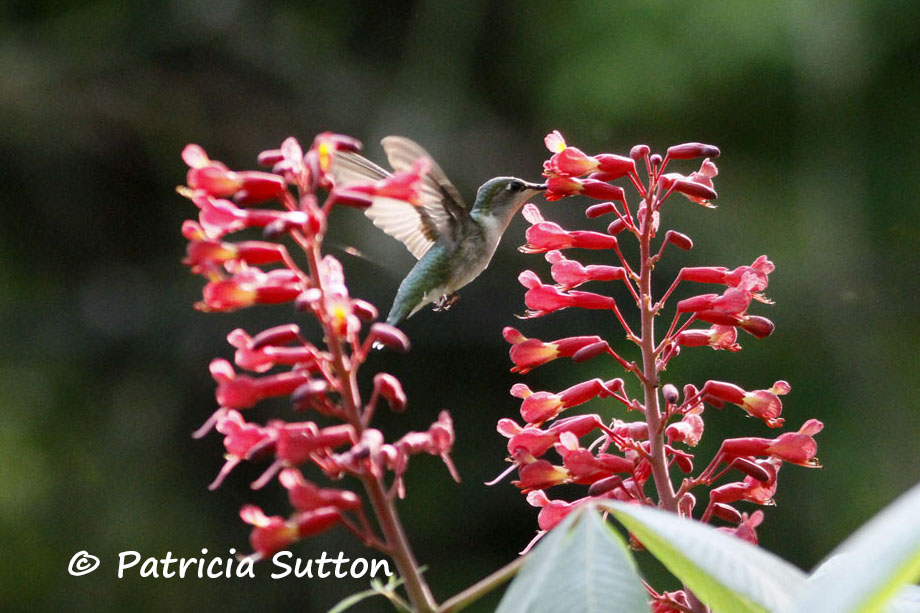
Our Red Buckeye in deep shade in our woods is always busy with hummingbird activity until it wanes.  I took this photo while counting the 80+ flower clusters on our 14-year-old tree last April 25th.

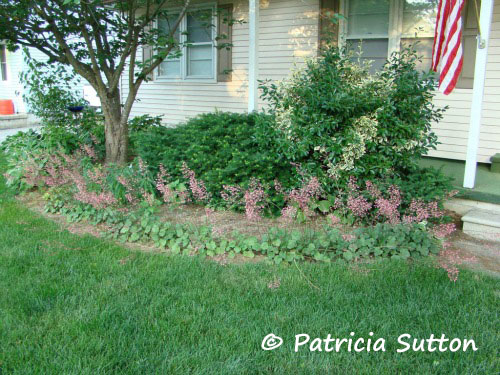
Through April and early May, they were drawn to all the spring-blooming goodies I’ve planted to attract them (Wild Columbine, Red Buckeye, Lyre-leaf Sage, Coral Honeysuckle, Coral Bells, blueberries, and Pinxterbloom Azalea).  If you are new to native plant gardening, be sure to check out my post:

Native Plants in Cape May Co, NJ, 2026
to learn where you can purchase them!

Since their diet is also made up of soft-bodied insects (the protein they need), they find those “a plenty” in our half-acre of native plants.

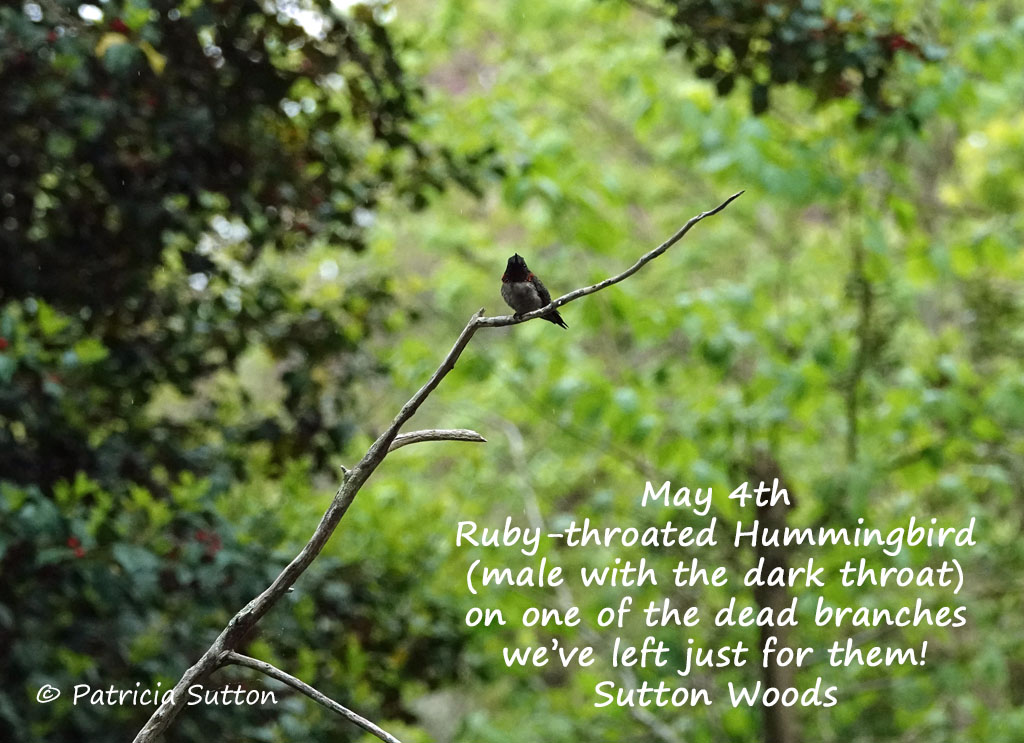
This year Ruby-throated Hummingbird activity again dropped off suddenly in our yard around May 16th.  Until then they were emptying seven feeders (with four ounces each) every few days.  The average person would think that they were gone (or so it seemed), but we knew better from years and years and years of wildlife gardening experience!

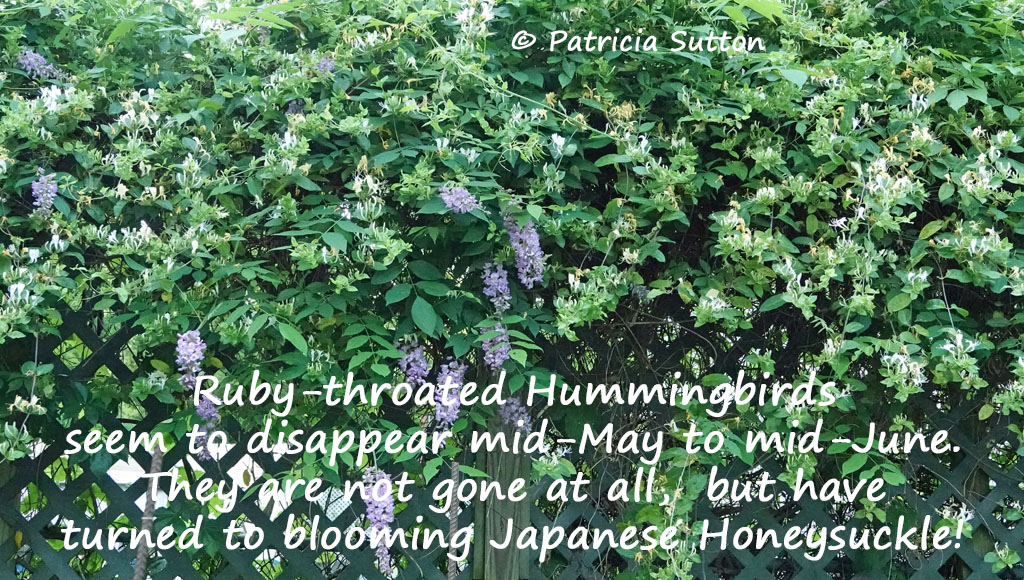
Sure enough, their disappearance around this time of year each spring coincides with the blooming of Japanese Honeysuckle.  Each mid-May through about the 8th or 9th or 10th of June, Ruby-throated Hummingbird sightings drop off abruptly.  Many assume that their hummingbirds have left, but in fact they are very distracted by and feeding on blooming Japanese Honeysuckle instead.

On a cool evening, the sweet scent of Japanese Honeysuckle drifts in my open window.  Yes it is highly invasive, and we’ve removed it and are always on the lookout for seedlings in our woods and elsewhere on our property.  But a mass of it covers the chain link fence that surrounds our backyard.  Because it grows up and over the chain link fence from each of our neighbors’ yards (to either side), we let it be.  It is too mighty a task to remove it.

So, wait patiently until about June 8th, or 9th, or 10th and your Ruby-throated Hummingbirds will be back in force.  Do not let them return to icky, poorly maintained hummingbird feeders.  Keep up your weekly feeder maintenance: cleaning and refilling with fresh solution.

As a long-time naturalist and wildlife gardener, I’ve shared this “quiet hummingbird period” in my Hummingbird Fact Sheet for over 40 years now (point 5 under “Feeder Maintainance,”) but still people are caught by surprise when activity drops way off.

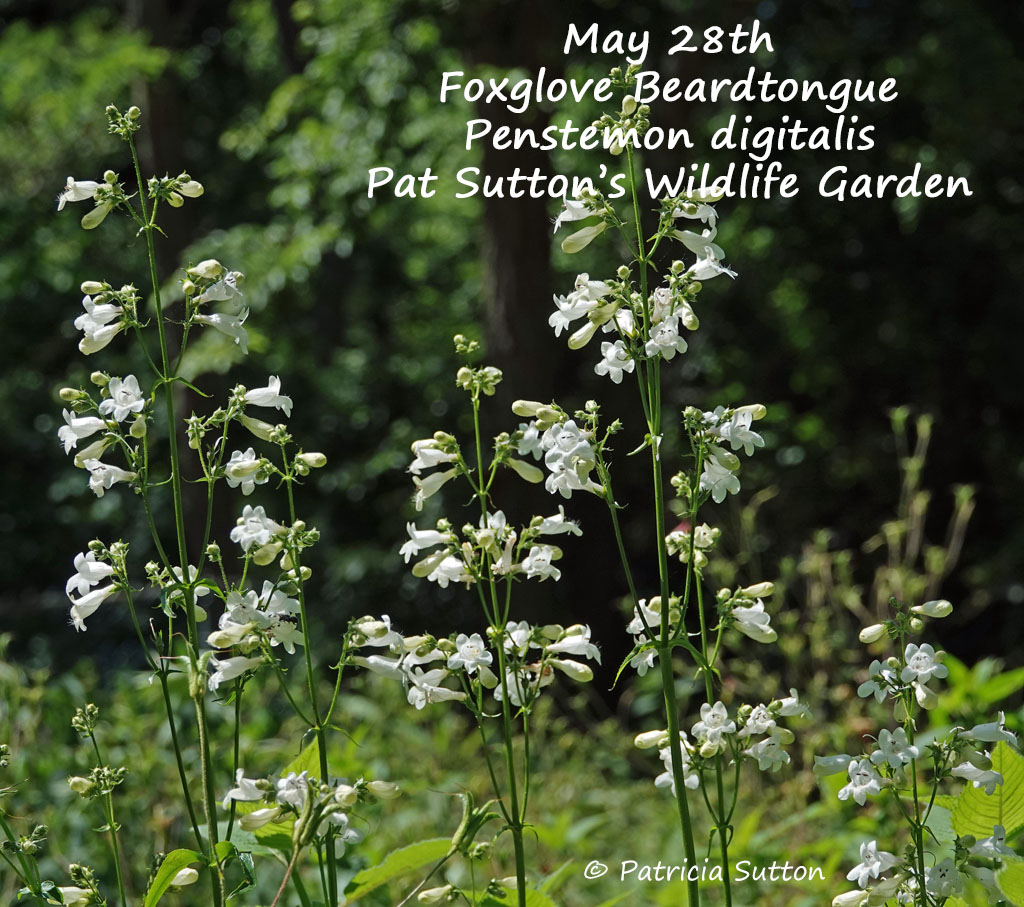
In addition to well-maintained feeders, be sure to provide native nectar plants Ruby-throated Hummingbirds are drawn to, like Foxglove Beardtongue, a great native perennial during the quiet bloom period from late May to mid-June.

If any of your neighbors are swayed to hire one of the Mosquito and Tick Removal companies, speak to them about your hummingbirds and share that the sprays used by these companies impact hummingbirds, the insects they need to feed on, and many, many beneficial insects.  Read my post, “Help! A Private Company is Spraying The Neighbor’s Yard for Mosquitoes.” It contains many more details on this topic.  You might also want to read the excellent article on this topic (“What are Eco-Friendly Ways to Control Backyard Bugs“) that was in the New York Times climate desk on June 4, 2024.

Be sure to read my other Hummingbird POSTS:

Ruby-throated Hummingbird — Part One — SPRING ARRIVAL
Ruby-throated Hummingbirds: How to Attract Them

Happy Wildlife Gardening,
Pat

Hair Cuts Needed For Some Native Perennials

Hi Gang,

If you don’t have a herd of rabbits or a Groundhog or hungry deer, this is the time of year to get out your clippers and give your asters and a few other fall-blooming perennials a HAIR CUT.  I cut back New England Aster, Common Blue Wood Aster, Smooth Blue Aster, and Tall Sunflower (my stands of White Wood Aster often do not need haircuts).

Why haircuts, you might ask?  It is quite simple.  If you want New England Asters and other fall-blooming perennials bushy and full of flowers when they bloom, they need haircuts now, otherwise by fall they will be so top heavy that they are likely to flop over from the weight of flowers on long, unbranched stalks.

Thirty plus years ago Karen Williams, owner of Flora for Fauna (native plant nursery), shared this sage advice with me about maintaining one of my favorite native perennials, New England Aster, and I’m about to share it with you.  Though this post is for folks with plants that are several years old and flourishing, not for brand, spanking new plants that have just been put into the ground this year.

NEW ENGLAND ASTER
2 HAIR CUTS: (roughly) Memorial Day & 4th of July

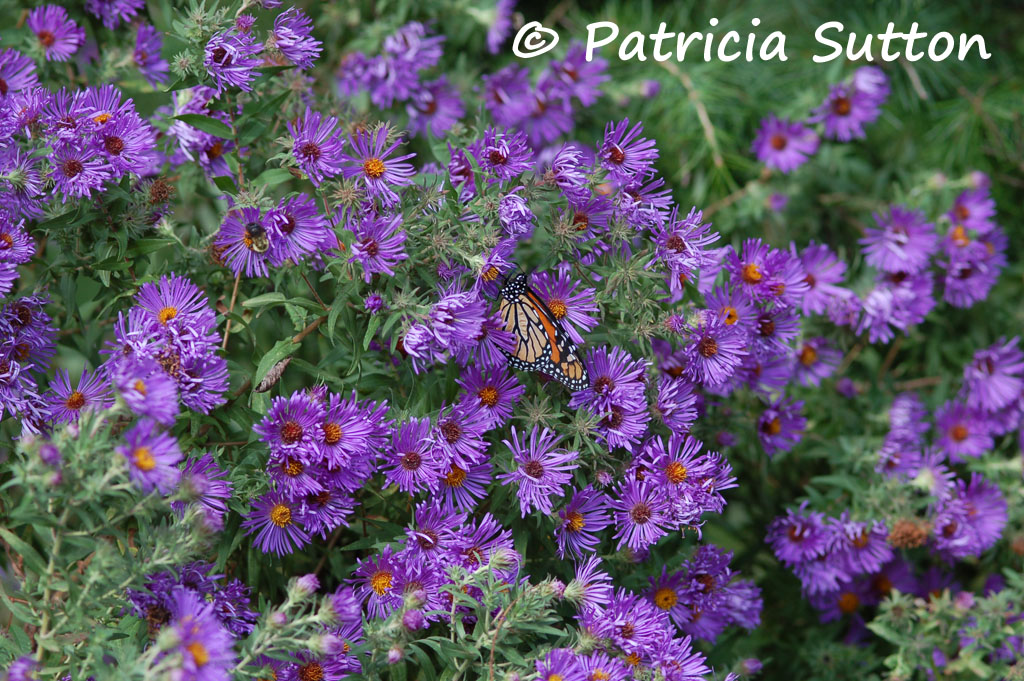
Blooming New England Aster is a magnet for Monarchs and other pollinators, here on October 2nd in my garden

New England Aster can get very tall and top heavy by the time it blooms in the fall. And the last thing any of us want is for its lovely spread of glowing purple flowers, nectar, and joy to be laying on the ground come fall.

To help it grow into a many-branched, bushy plant instead of a tall, gangly, top-heavy plant, all you need to do is to give it 2 hair cuts on or around the 1st two holidays of the growing season: Memorial Day and 4th of July. Of course these dates are not single-day events, but roughly when you want to give New England Aster its hair cuts.  Too, you can be the judge if you need to do your hair cuts earlier, or even if the 2nd haircut is needed.  Know that you can jump start the process by several weeks to a month some years!

As a wildlife gardener I don’t clean up and toss the cuttings, but instead leave them lay on the ground at the base of the plant.  That way any caterpillars that went for a tumble with the cuttings can climb back onto the plant and continue to munch.  Doug Tallamy (author of How Can I Help?, Bringing Nature Home, Nature’s Best Hope, and The Nature of Oaks) shares that 100 species of butterflies and moths lay their eggs on our native asters in this ecoregion, making asters one of the TOP Keystone Native  Plants used by butterflies and moths for egg laying.  Don’t be surprised if some of your cuttings take root and become additional asters!

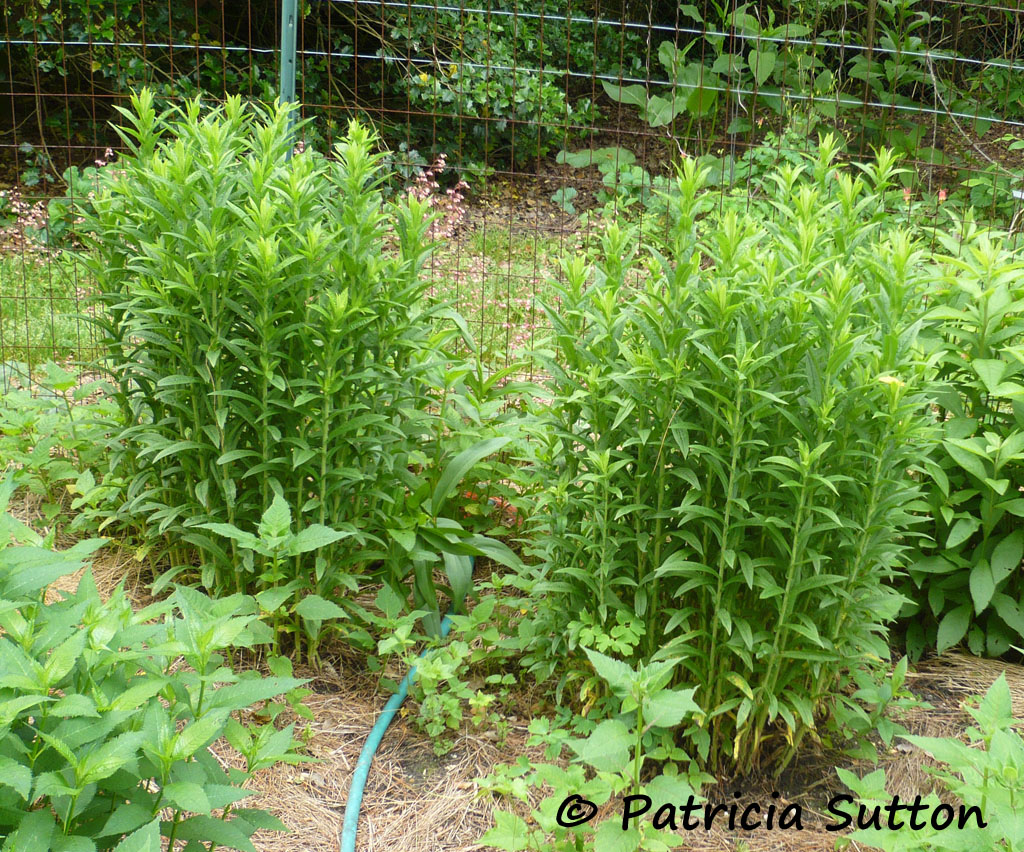
New England Aster in need of its first haircut, otherwise this plant will certainly flop come the fall blooming period
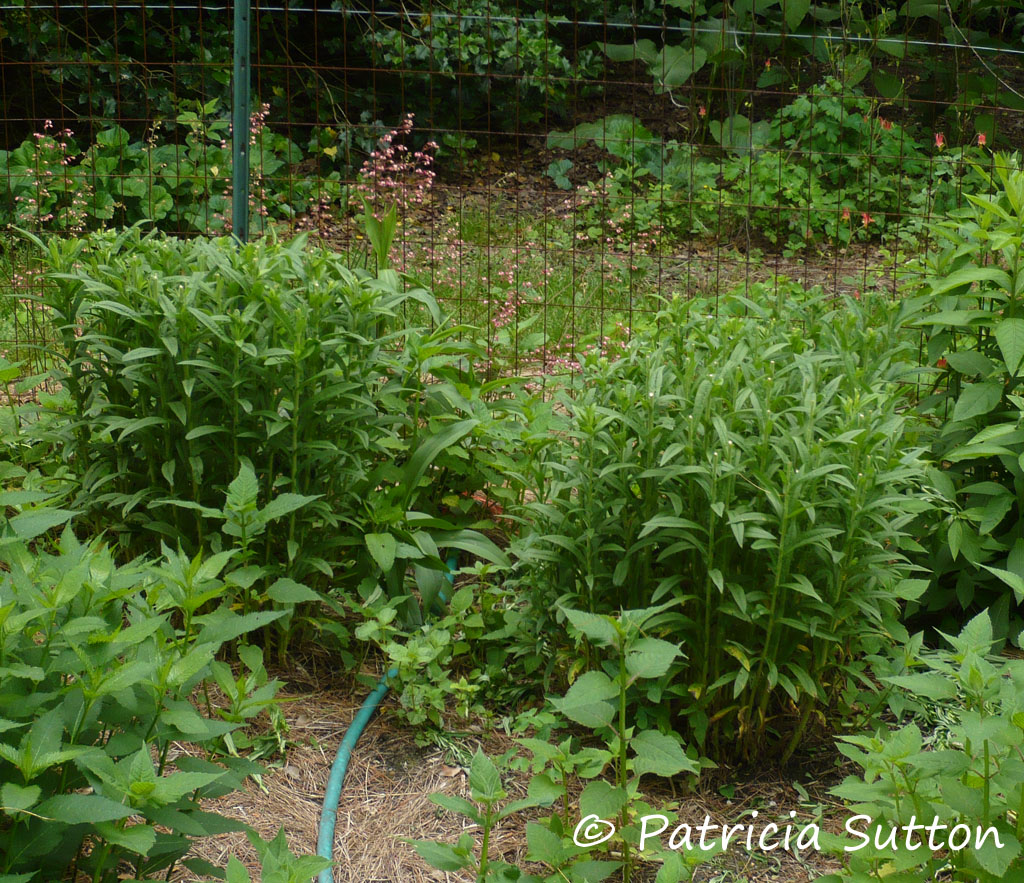
New England Aster after its first haircut.  I cut a good foot or two off the top of each stem (hedge trimmers work great . . . no need to be fussy and cut stem-by-stem).
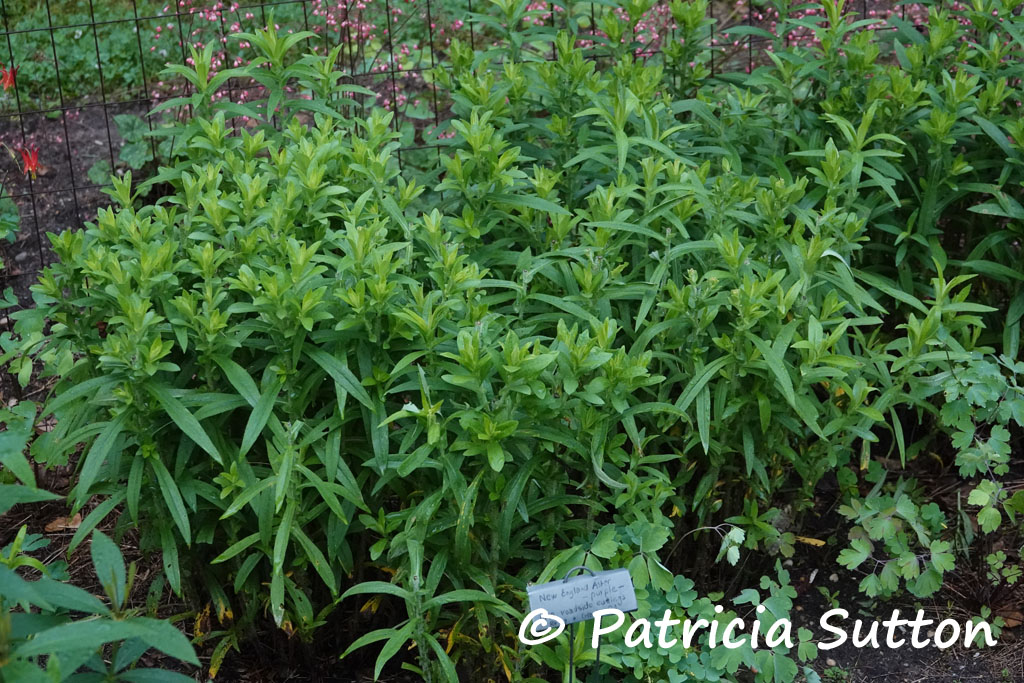
13 days later, the New England Aster is already branching heavily where each stem was cut.

Around Memorial Day, I cut each stem 1/2 (or 2/3) off (or about a foot or two off the top, depending on how tall it is, if that is easier for you to remember). I use big shears and just chop  away. What happens next is that each cut plant stem sends out 2 or more new shoots where it has been cut, in other words it branches and becomes more bushy!

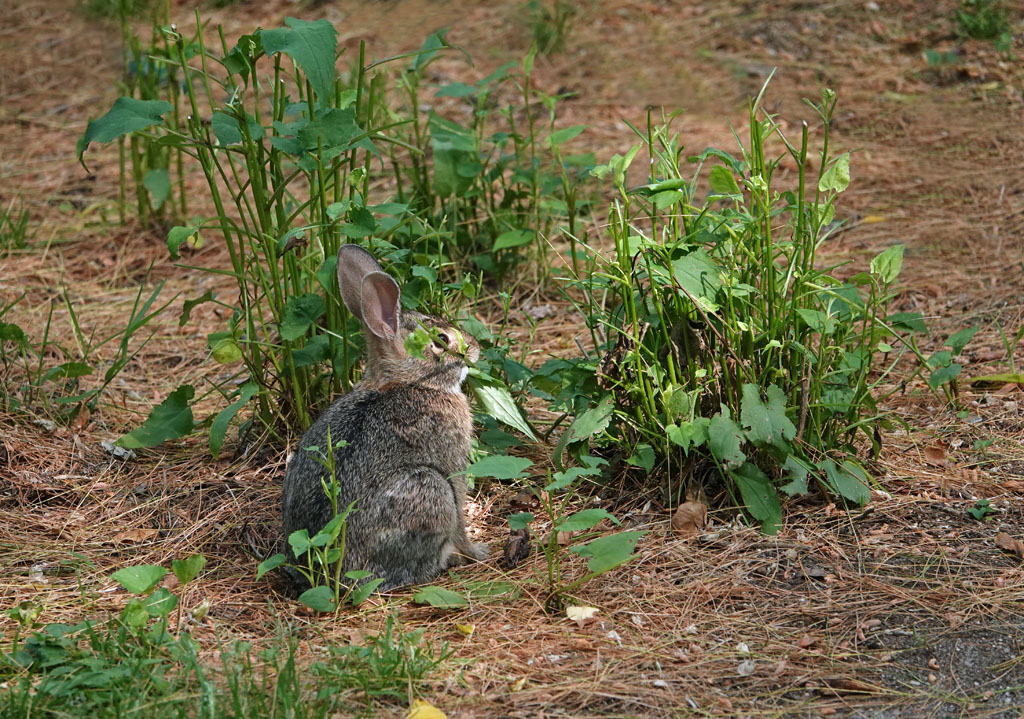
E. Cottontail caught in the act of giving Common Blue Wood Asters a hair cut on May 28th one year

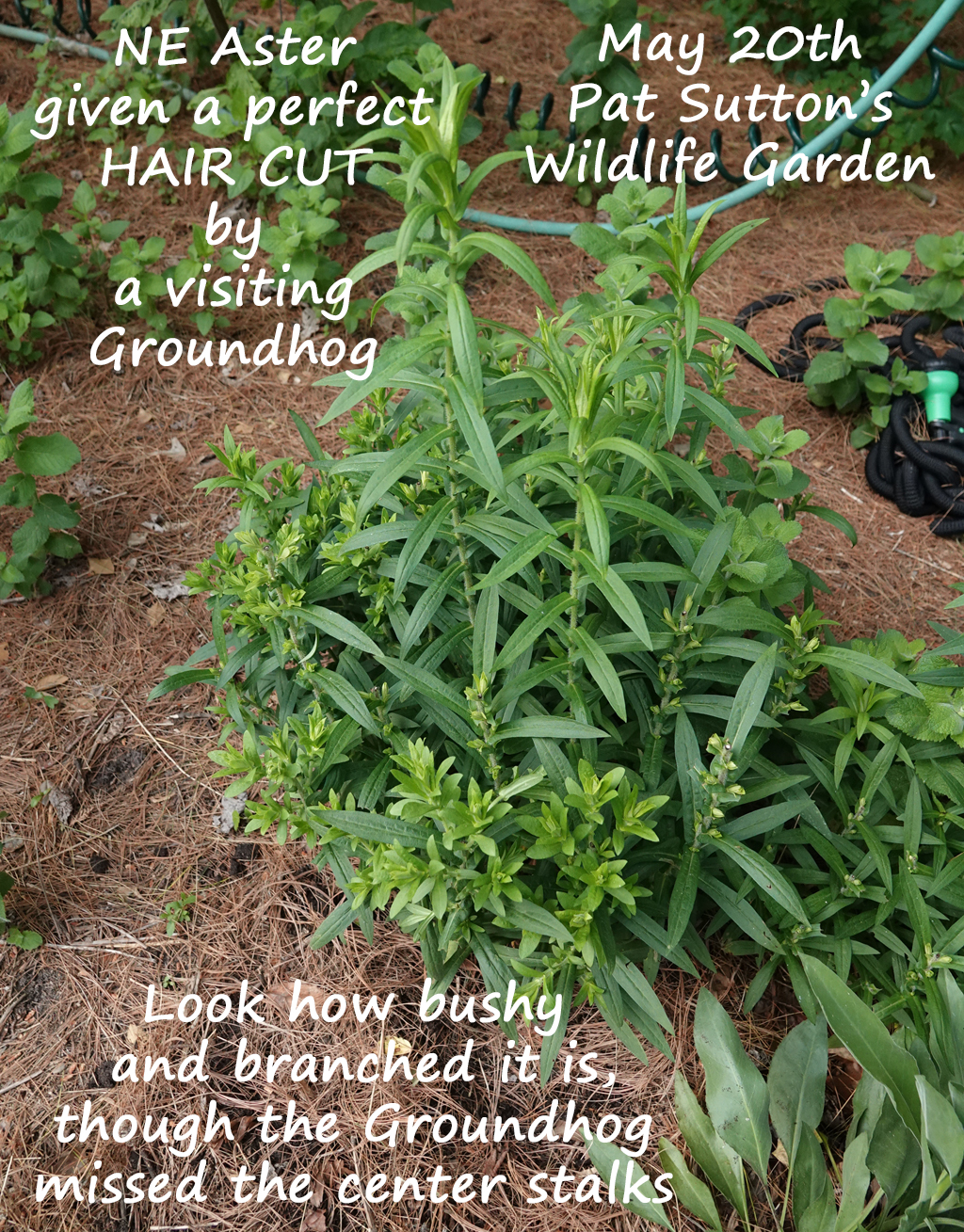
Some of my asters get regular haircuts  from plentiful E. Cottontails (they must think our yard is one large salad bowl crafted just for them).  I’ve planted the lovely fall-blooming, shade loving Common Blue Wood Aster, Symphyotrichum cordifolium, under our Tulip Tree and in our woods.  Despite hungry rabbits it has flourished and spread into other beds, our meadow, the perennial garden, and elsewhere and that pleases me.  It is so plentiful that it keeps the rabbits busy and away from most other asters.   We’ve fenced our yard, so deer are not an issue for us.  But other gardeners share that deer routinely give their asters hair cuts.  Our visiting Groundhog arrived in 2020 with the Pandemic.  It has been an “on again, off again” garden visitor, disappearing for months at a time only to return and appear quite at home now and then.

If needed, around 4th of July, I give my plants their 2nd hair cut (not back to the 1st cut, but cutting back some of the new growth since Memorial Day). You may want to be more creative for this hair cut and cut the many stems in your plant different lengths. For instance, give the stems in the foreground more of a hair cut, the stems in the middle less of a hair cut, and the stems in the back just a little hair cut. This way your plant stems will bloom at different heights.

You may find that some plants haven’t grown as tall as others, so you may choose to pass on the 2nd hair cut for some plants. If so, you’ll find that these plants will bloom earlier. This staggers the blooming period so that you have New England Aster nectar, color, and joy far longer in your wildlife garden.

Sutton fall gdn-w-sig
My garden on September 27th full of mounds of blooming asters, thanks to hair cuts earlier in the year.

A bit more advice: once given hair cuts, New England Aster has “ugly legs.” The stems below the 1st haircut look “not so nice” . . . the leaves darken and fall off and the stems are quite bare. So you’ll want to have other perennials in the foreground blocking that view, so you’re not looking at ugly bare legs.

You can give 1-2 haircuts to some other fall-blooming perennials that grow tall and flop, so they’ll instead branch and become more bushy:
Goldenrod
Sedum
Sunflower

I love Tall (or Giant) Sunflowers and so do the Monarchs when they are migrating through in the fall
But if I’ve forgotten to give Tall (or Giant) Sunflower the 2 haircuts, it can be a beast to prop up or tie up, and keep from falling over, as you can see
Seaside Goldenrod chopped back after its 1st haircut. As it continues to grow I often spot stems I missed, grab the clippers and take care of business

For some summer-blooming plants that grow too tall for your garden, you can give them one haircut around Memorial Day, forcing them to branch, become bushier, and bloom lower. I sometimes do this with some of my favorite summer nectar plants so that I have an easier time seeing and photographing pollinators on them:
Culver’s Root
Garden Phlox (I tried this for the 1st time in 2023)
Ironweed
Joe-pye-weed
Sneezeweed
Blue Vervain
various Bonesets

Culver’s Root responding to its haircut, branching nicely!
I gave the Culver’s Root stems in the foreground a haircut, but left the back stems untouched.  This way the untouched stems will bloom on time and the  branching stems (due to a haircut) will bloom a bit later, and so the plant will offer nectar for a longer period

You can always experiment on other fall-blooming perennials that have flopped in your garden. If you’re not sure how hair cuts will turn out on plants other than those I’ve mentioned, try giving a hair cut to one stem ONLY (or if you have several plants of Cut-leafed Coneflower, for example, in your garden, give one of them hair cuts so you can compare results with your uncut plants). Then see how your plant reacts and whether you like the results.

Don’t hesitate to ask a question, but please use the Comment Box at the end of this post, so others can benefit from your question and my answer.  Maybe scroll down through previous questions; you may find that your question is already answered.

Happy Wildlife Gardening,
Pat

Cape NativeScapes, a new Native Garden Design Co. in Cape May Co., NJ

Hi Gang,

Many of you know that for 25+ years I led tours of private wildlife gardens in Cape May and Cumberland Counties, including my own now-49-year-old native plant wildlife habitat.

These tours were windows into a new world of gardening for many who had previously gardened with one thing in mind, pretty flowers. Tour participants stepped into oases swimming in butterflies and other pollinators, a blizzard of Ruby-throated Hummingbirds, warbler fallouts in spring and August (fall), wildlife ponds full of breeding frogs and dragonflies, munching Monarch caterpillars on stands of native milkweeds, a host of other butterfly and moth caterpillars on their native host plants, and much more. These tours were a way to capture the heart of would-be wildlife gardeners and I am so glad I had the opportunity to organize and run them. I know these tours successfully hooked many tour participants who went home and rethought their own garden spaces. Many went even further and became involved in their community open space areas, by encouraging and/or planting native plant gardens at public sites, in parks and in school yards.

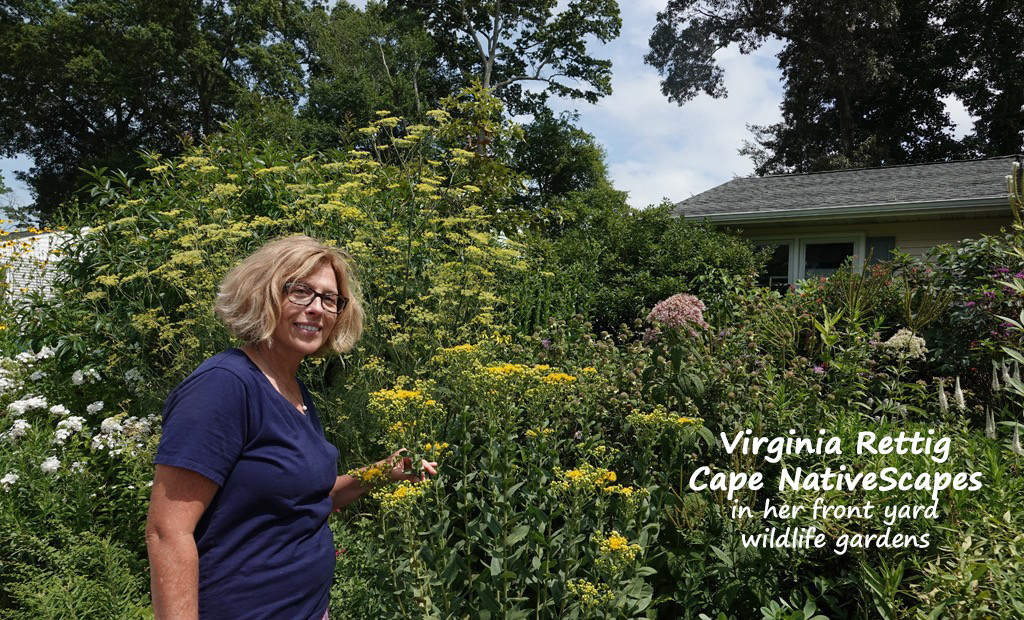
I will never forget meeting the new Assistant Manager of the Cape May NWR, Virginia Rettig, in 2004. She had just moved to Cape May County and went out of her way to introduce herself to me. She boldly stated that her goal was to have her own yard on one of my tours. And that she did.

In no time Virginia had converted her yard of lawn to lovely, densely-packed native plant gardens in the front yard and beautiful, many-layered shade gardens under tall oaks in the back yard. Her gardens were added to my “Mid-County Tours” and always a highlight! You’ll find some fun photos of Virginia Rettig’s gardens in those early years (along with others on the “Mid-County Tours”) on my website HERE.

Well, many years later now, I am delighted to share that Virginia Rettig has created a new business, Cape NativeScapes. And I can not recommend her highly enough. I will let Virginia’s words speak for themselves:

Cape NativeScapes
a NEW Native Garden Design Company in Cape May County, NJ

Cape NativeScapes was recently launched in Cape May County, NJ. The purpose of the business is to provide design and installation services to create gardens using native plants at residential sites, specifically in Cape May County.

Owner Virginia Rettig recently retired from a 30-year career with the U.S. Fish and Wildlife Service and most recently was refuge manager at the Edwin B. Forsythe National Wildlife Refuge in Galloway, NJ. In addition to her expertise as a habitat manager, and her love of nature, Virginia has a long-held passion for native plants. “Once you understand how these plants interact with, attract, and sustain wildlife, you see how important it is to not only use native plants, but to arrange them in a way that maximizes their benefits for as many animals as possible,” she stated.

Virginia has been creating wildlife habitat gardens for nearly 35 years for herself, family, and friends and now intends to bring that knowledge to homeowners. Southern New Jersey, and Cape May County in particular, is critical for myriad animals. The birds and insects that migrate through the county rely heavily on all available vegetation. While there is a fair amount of protected land in the area, homeowners, as stewards of their own properties, can provide additional habitat connecting preserved lands.

“Migratory birds rely on native trees and shrubs for food and cover. Dragonflies, bees, and butterflies need open areas with places to perch, feed on nectar and even overwinter in their various life forms. We can make those habitats in our yards pretty easily,” Virginia asserted. What may be needed, however, is the knowledge and skill to design and maintain those sites, and that is where Cape NativeScapes steps in.

The design process starts with an on-site consultation that includes analysis of sunlight direction, soil type and moisture, and thorough discussions about the homeowner’s goals. Clients are given the information from the visit even if they do not pursue a project with the company, and the consultation fee is applied as credit if the homeowner moves forward with design and installation.

Virginia states, “while native gardens and habitats are much less work than traditional lawns, they still require periodic upkeep. Cape NativeScapes provides a monthly maintenance plan along with a full-color guide with information about each plant that is installed to teach and support the client. I am very interested in empowering native plant wildlife gardeners!” A variety of maintenance packages and services are also offered by Cape NativeScapes.

For more information:
Cape NativeScapes

Contact Virginia Rettig
to schedule a site visit:
virginia@capenativescapes.com


Happy Wildlife Gardening,
Pat

FREE LOAD of Wood Chips (Cape May County residents)

Hi Gang,

For years we have gone to Dave Parker’s company, Treeworks, when we need arbor work. And for many of those years, they have generously dumped a LOAD of fresh wood chips for us when we need to refresh our wildlife garden path.

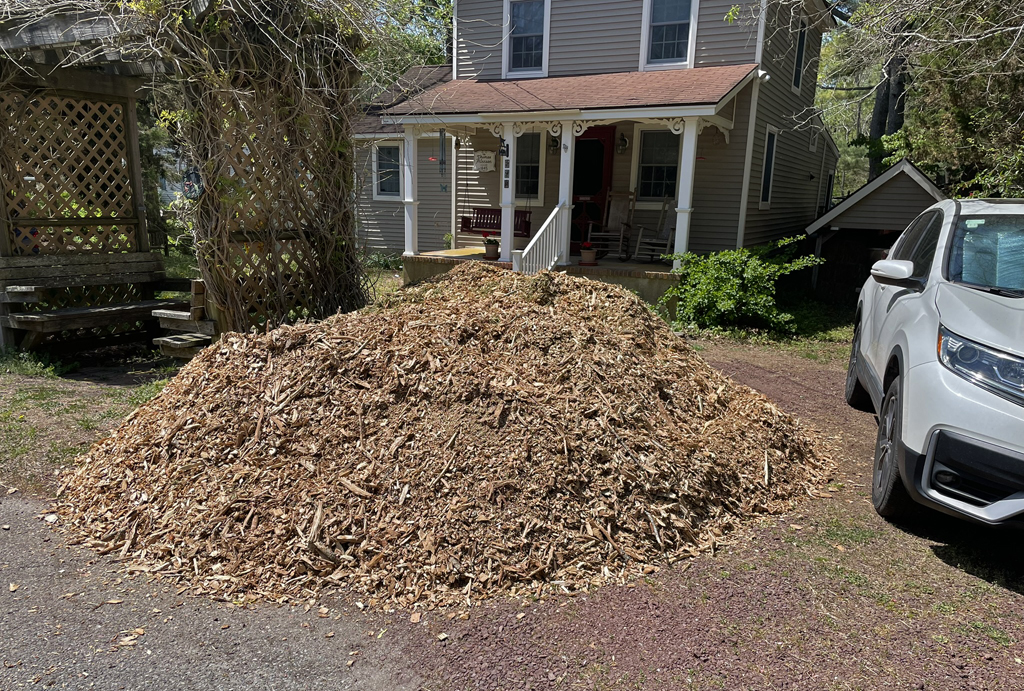
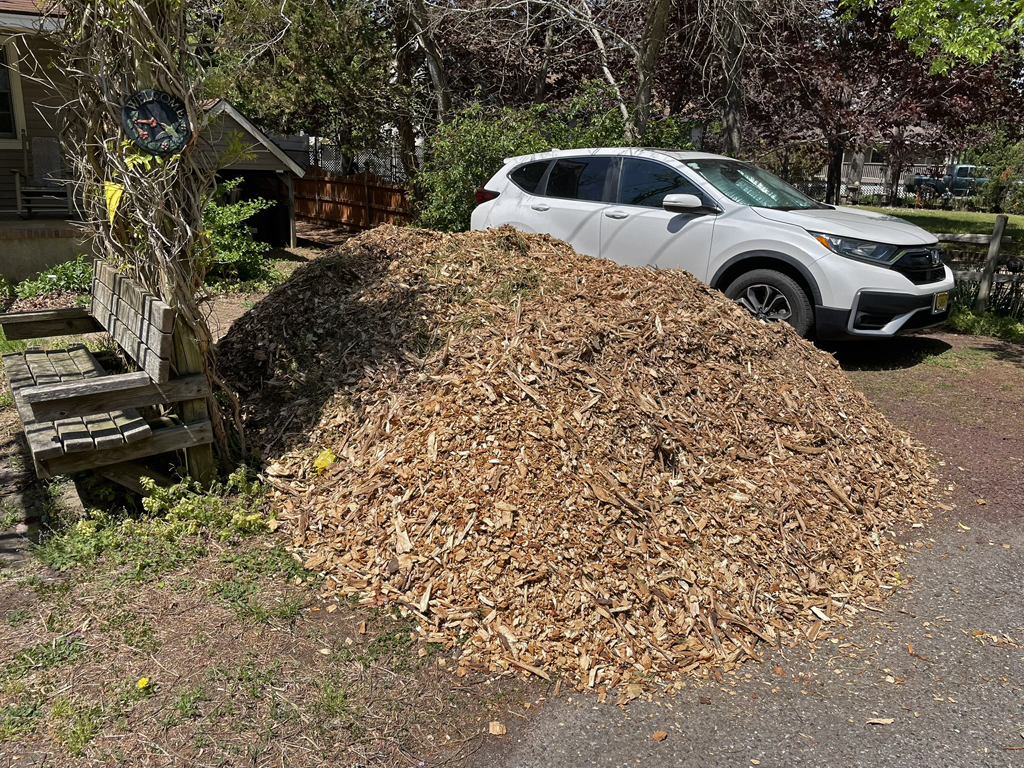
Every 3-4 years our wood chip paths turn to rich soil and sprout so many plants that we need to scoop up that lovely soil and replace it with fresh wood chips. Yesterday, Treeworks kindly dumped a LOAD of FREE Wood Chips for us to do just that!

Our partial LOAD yesterday (the truck was not totally full) was about 5-6 cubic yards of wood chips.   Here are photos of our free LOAD of Wood Chips.

When talking earlier this month with Dave Parker to learn when his crew would be in Cape May County, NJ, and when they might have a load of fresh, unadulterated wood chips for us, he shared that if others would like to make a similar arrangement, they should call his office.  Details follow.

Please understand that Treeworks can not deliver small amounts of wood chips . . . we are talking a LOAD, a truck full, or a truck partially full.  Maybe you don’t need a full LOAD of wood chips, but maybe you have a friend or two to share them with. So, consider having the load dumped at one of your homes, and all of you interact and benefit from these free wood chips.

FREE WOOD CHIPS

Call TREEWORKS office
609-463-8733

Ask to be put on the list
for a load of Wood Chips
Share your name, contact info,
& snail mail address
(i.e. where you want the
load of wood chips delivered)

Don’t expect them in a day or a week,
but they will come through for you!

When they are delivered
we’ve always tipped the delivery person
as a thank you!

Happy Wildlife Gardening,
Pat

Native Plant Sales in Cape May Co., NJ, 2026

Hi Gang,

I am delayed this year getting my 2026 update done and posted on my website, but in the meantime, please go to my 2025 list of “Some Sources of Native Plants,” check each near you that you like to frequent (either their website or with a phone call) and don’t miss their spring offerings!

Upcoming native plant sources and sales here in Cape May County, NJ, are included below. Mark your calendar and do not miss these great opportunities! Details follow:

NJ Audubon’s 2026 Spring Native Plant Sales on Sat., May 2nd, 10 am – 4 pm, will occur at 3 NJ Audubon Centers. Get there early for the best selection; first come first served. Check website for full details & plant lists. Left over plants are available for sale afterwards.

  • Nature Center of Cape May (NCCM), 1600 Delaware Ave., Cape May, NJ 08204 (Cape May Co.); 609-427-3045; nccm@njaudubon.org
  • Lorrimer Sanctuary, 790 Ewing Avenue, Franklin Lakes, NJ 07417 (Bergen Co.); 908-481-4090; lorrimer@njaudubon.org
  • Scherman Hoffman Sanctuary, 11 Hardscrabble Rd, Bernardsville, NJ 07924 (Somerset Co.); 908-396-6386; shws@njaudubon.org.

Flora for Fauna Nursery is open by appointment ONLY, but owner Karen Williams hosts a number of Open House Sales each year at 1209 Freidriechstadt Ave, Woodbine, NJ 08270 (Cape May Co.); 609-442-3747; flora4fauna@verizon.net. Her 1st two Open House Sales of 2026 will be April 23-25 (Thurs. – Sat.) and May 7-9 (Thurs. – Sat.) from 9 am to 3 pm. Follow “Flora for Fauna” Facebook page for plant lists (posted on April 19th), payment options, and future sale dates.

Dustin & Brittany Welch, The Wildlife Gardener, offer an assortment of native plants for retail sale and also offer habitat design. Their first 2026 pop-up sales follow: May 1-2 (Fri.-Sat), May 15-16 (Fri.-Sat), June 5-6 (Fri.-Sat) with Fri. Happy Hour Sales from 5-7 pm, and Saturday hours from 9 am – 1 pm at 14 Woodland Road (off Goshen Rd), Cape May Court House, NJ (Cape May Co.); TheWildlifeGardenerNJ@gmail.com. April 20th they posted a list of plants that will be available (payment options, etc.) at these spring sales on their “The Wildlife Gardener” Facebook page. If these times do not work for you, they also welcome private sales by appointment. Follow their facebook and Instagram page for sale dates, times, plant lists, and payment options.

Heidi Hanlon grows native perennials, shrubs, and trees that benefit wildlife. Heidi shared on her “Wild About Plants at Heidi’s Acre” Facebook page that she will have an open house plant sale on Fri. & Sat., May 15 (6 – 8 pm) and May 16 (8 am – 2 pm) at 24 Cardinal Drive (off Rt. 47 near mm 13), Cape May Court House, NJ. See her facebook page for the plants she will have available on these sale days. The plants will be in the driveway and on display for purchase during these times. Plants are also available throughout the growing season by appointment. You can let Heidi know what plants you are interested in and schedule a pickup time. hjhanlon@yahoo.com . Used garden pots welcomed.

Goshen Gardens (Nursery), 570 N Delsea Dr, Cape May Court House, NJ 08210; 609-778-4075 (Cape May Co.); goshengardensnj@gmail.com. 2026: SPRING & SUMMER hours: May 9 – July 26: Saturdays & Sundays (9:30 am – 3 pm). If weekends do not work for you, call for appointment. CLOSED AUGUST. FALL hours to come. See website for details & hours. Nice selection of native trees, shrubs, vines, perennials, and non-native “Chocolate Cake” annuals (Zinnia, Mexican Sunflowers, etc.). They only sell what they grow and all plants are pesticide free.

Happy Wildlife Gardening,
Pat

Ruby-throated Hummingbird – Part One – SPRING ARRIVAL

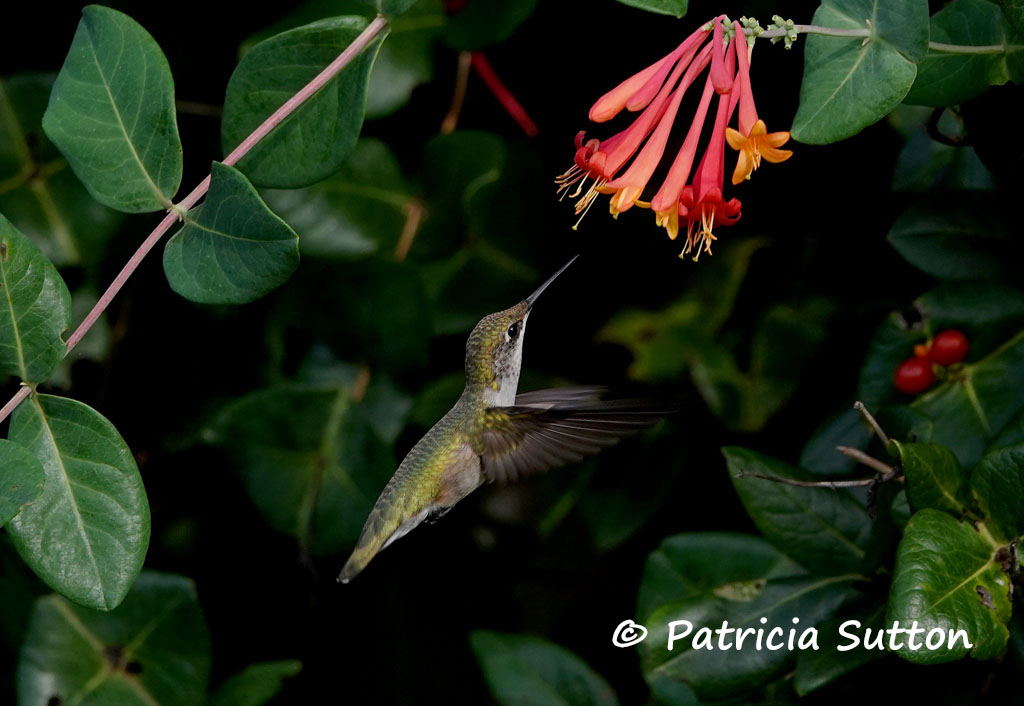
Ruby-throated Hummingbird at Coral Honeysuckle

Surging north over a three-month period (from late February through early May), millions of Ruby-throated Hummingbirds depart their winter homes from southern Mexico to Costa Rica and northern Panama. They head north, reach the Yucatan Peninsula in Mexico, and brave the 500 mile-wide Gulf of Mexico water crossing.  If weather cooperates and they’re lucky and strong flyers, they reach the Gulf Coast (Texas, Louisiana, Alabama, Florida).  Refueling, they then head “back home” to where they were born, something known in the bird world as “site tenacity.”

Most years Ruby-throated Hummingbirds reach our southern New Jersey wildlife habitat around April 20th, but they don’t seem to settle in until the end of April or early May. This year (2026), the very first Cape May County, NJ, sightings were on April 4th in two different wildlife gardens.  The first NJ sighting was on March 31st in Galloway (Atlantic County).

Once I hear a whisper of the 1st hummingbird in NJ, I scramble to set up a few feeders for these northbound scouts.  Many keep going and do not stick around.  So little is in bloom right now, that they need all the help they can get.  Last night I made hummingbird feeder solution and this morning I put out 4 feeders.  I’ve watched them, off and on, all day.  I’ve had no hummingbird sightings in our wildlife habitat . . . yet.

Today the mystery of when Ruby-throated Hummingbirds will appear (and when we need to get our feeders hung) has been simplified.  Each spring you can monitor Ruby-throated Hummingbird migration north (AND enter your own sightings) on Hummingbird Central and on Journey North (when visiting, be sure you have selected this year’s map).  Check these two sites each spring when you begin to wonder when to expect your returning hummingbirds.

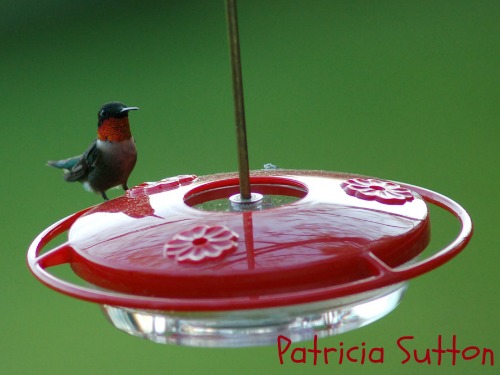
Male Ruby-throated Hummingbird on a HummZinger mini feeder

The Importance of Well-maintained Feeders

What many people do not realize is that, if you hope to attract nesting hummingbirds in the spring as they journey north, you need to place well-maintained feeders in your wildlife habitat. The reason is simple!  Our gardens are mostly dirt when hummingbirds first arrive in April, with little in the way of blooms and nectar.

Hummingbirds are looking for a secure source of food and will settle in when they find it. Feeders are just that. Of course you want to keep those feeders fresh like flower nectar, so be sure to clean your feeders at least once a week and refill them with fresh solution when temperatures are pleasant in early spring and late fall.  During periods of toasty-hot weather (which in recent years is all too often and most of the summer) clean and refill feeders every 2-3 days (as soon as the solution begins to look cloudy).

Now, knowing this, you can clearly see why you don’t want to purchase the biggest feeder you can find (or one that is tricky to take apart and clean), since you would be dumping un-used sugar water solution every few days.

The proper solution that is most like nectar in the wild is 1 part granulated white sugar (just like you put in your coffee) and 4 parts water. Oh, and don’t try to make your solution healthier by using raw sugar or honey. Both of these can be deadly to hummingbirds; honey and the iron in raw sugar can lead to a fatal fungus disease.  I mix a quart at a time and refrigerate the rest. I own 16 feeders so that I can take 8 clean and freshly refilled feeders out to replace the 8 I’m bringing in to clean.

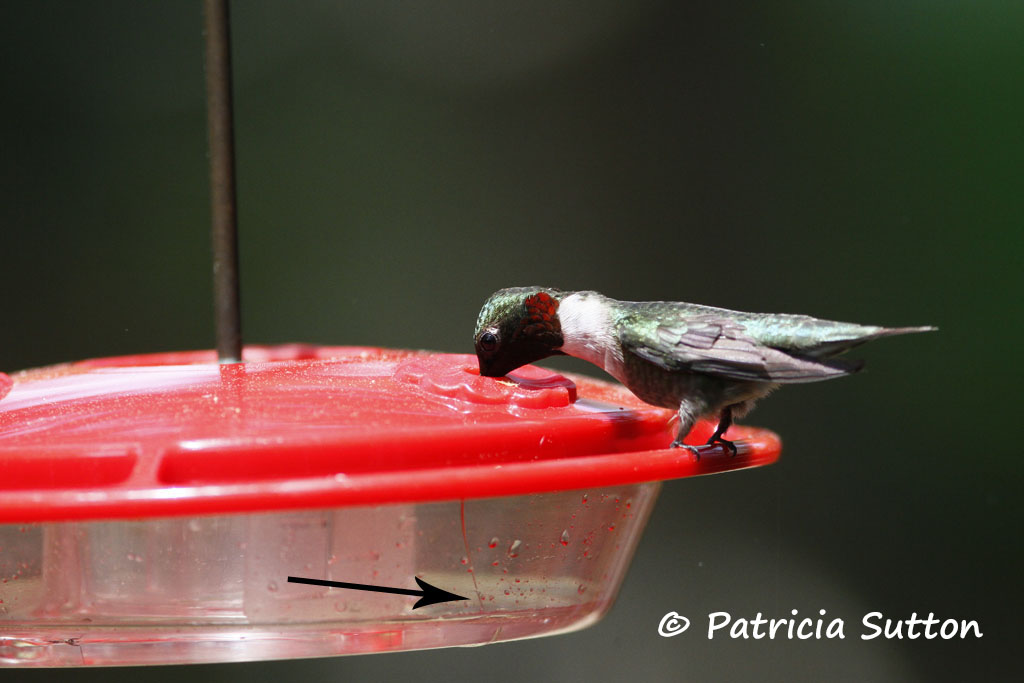
A hummingbird’s long bill and even longer tongue easily extends to the bottom of a feeder

Right now, in the early spring (and also in late fall when hummingbird activity is low), I put just 2 ounces into each feeder; a hummingbird’s long tongue can easily reach the solution at the bottom of a feeder.  Later in the season, when activity peaks, I’ll fill the feeder to capacity (8 ounces).  Sugarcane fields have gobbled up so much important habitat that the last thing I want to do is toss 6-7 ounces of sugar water solution every time I clean and refill a feeder.


HummZinger mini (8-ounce) feeder

 My Favorite Hummingbird Feeder

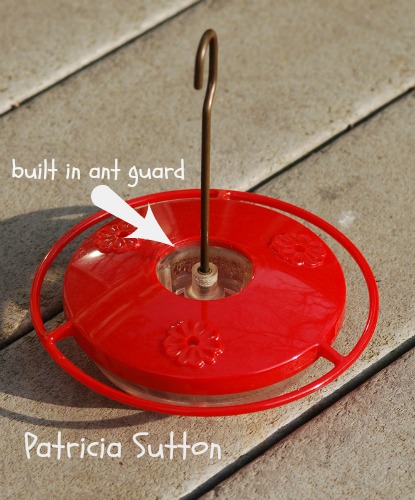
My favorite feeder is the Classic HummZinger Mini 8-ounce feeder by Aspects. This feeder is incredibly well thought out (no surprise since Aspects tapped Sheri Williamson, hummingbird expert and author of the Peterson Field Guide to Hummingbirds of North America, as a consultant). This feeder is easy to clean (which is A MUST – ditch your artsy, hard-to-clean feeders), has a built in ant guard (just fill it with water and ants must go for a swim to reach the solution), the proper solution is written inside the lid  so you can not forget it (emphasizing NOT to use red dye), the design is NOT bee-friendly (bees can not get to the solution because they do not have long bills and tongues), and Aspects offers a Lifetime Guarantee (which I have taken them up on, even when a cracked lid or bowl is my fault).

Once hummingbirds have settled in I place eight feeders around our one-half acre habitat so that one bossy male can not defend all of them (and blooming perennials, trees, and shrubs), though he tries. Two hang from our front porch, one from the back porch, one out my office window, one outside our screened porch, one under the Coral Honeysuckle arbor, one at the back of our perennial garden, and one at the back of our woods.  With this many options a female has a better chance of setting up a territory of her own around one of the feeders and nesting somewhere near this secure source of food.

One feeder equates to one bossy male. Two feeders placed out of sight of each other may lure in two territorial males. Three feeders scattered around your habitat, some in the front yard and some in the backyard, may lure in a third hummingbird, hopefully a female who will chose to nest in your yard. It is great entertainment watching a male try to defend all of your feeders and wildflowers, but don’t make it too easy for him or he will be your sole hummingbird.

What few realize is that male Ruby-throated Hummingbirds do not share well with others, even their own “mate” and young. Once a male has mated with a female, he’s done — and off looking for the next available female. So, be sure to have plenty of food in the way of feeders and native trees, shrubs, vines, and perennials that bloom from early, early spring right up until frost.

Nectar (and the solution in feeders) is what powers and maintains a hummingbird’s incredibly high metabolism. Nectar is like a candy bar to a hummingbird, but who can live on candy bars alone? Their meat or protein comes from eating tiny, soft-bodied insects and spiders. So, a pollinator garden full of insects is like a supermarket to hungry hummingbirds.

In May

Our Coral Honeysuckle arbor, May 21, 2020

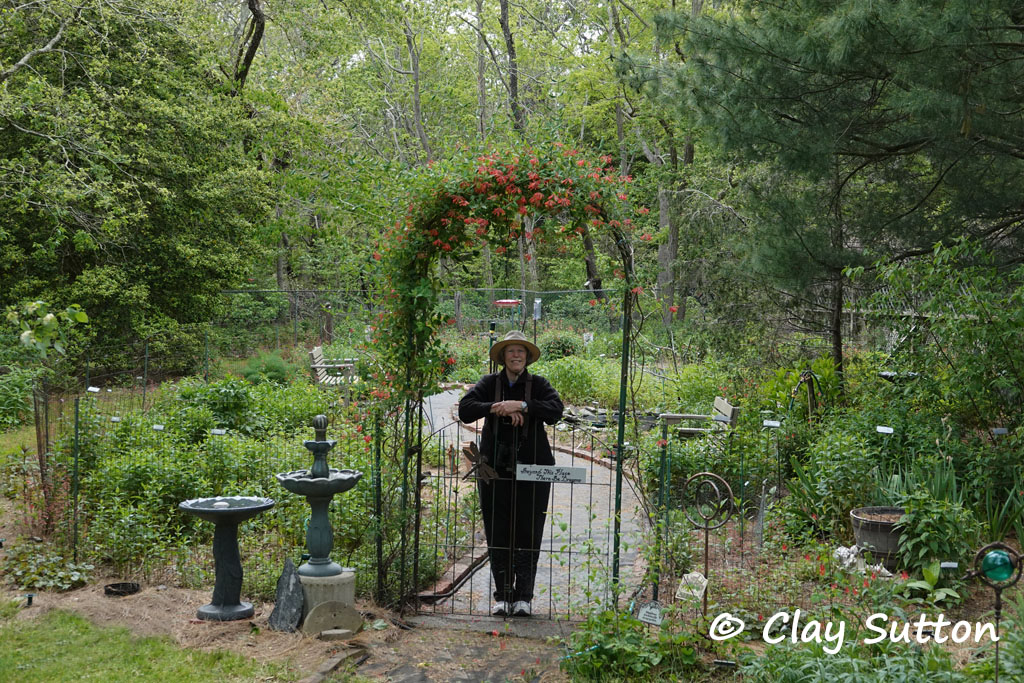
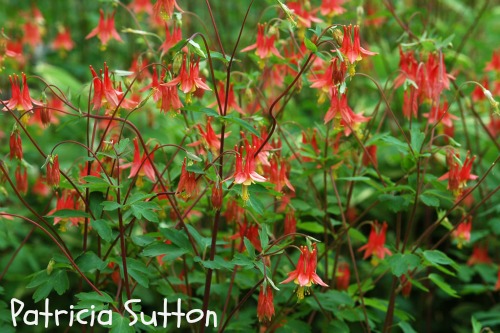
By mid-May, in my South Jersey garden, many spring perennials have kicked into high gear, so feeders are not the only show in town.  My arbor of lushly blooming Coral Honeysuckle, Lonicera sempervirens, is a hotbed of activity.  It blooms lushly in May then continues to bloom all summer and fall long, until the first frost (with fewer and fewer flowers as the year unfolds).

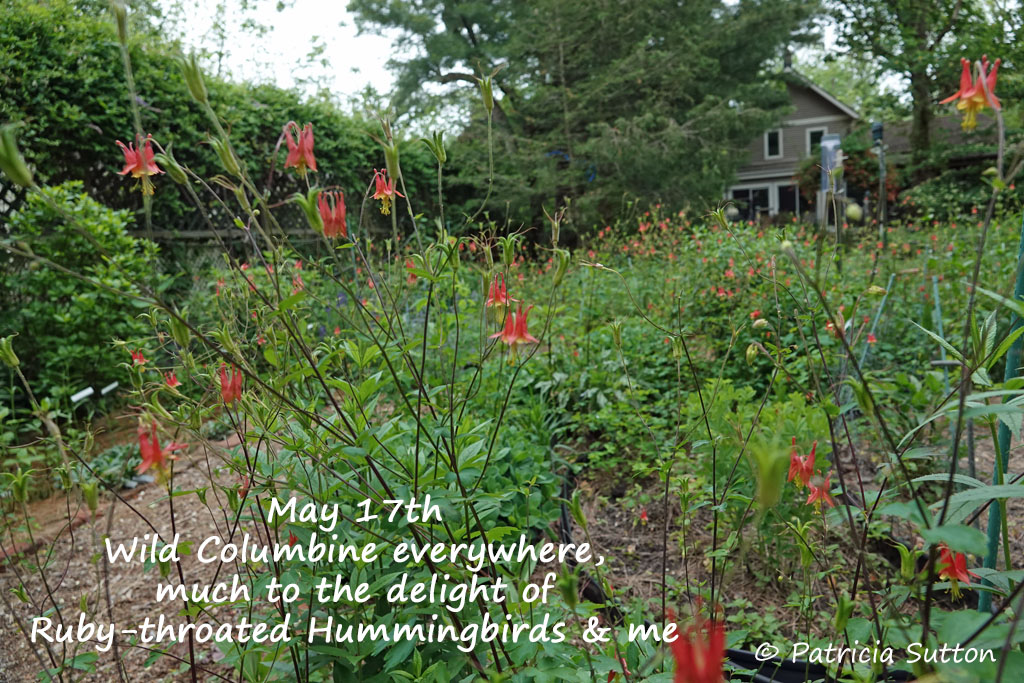
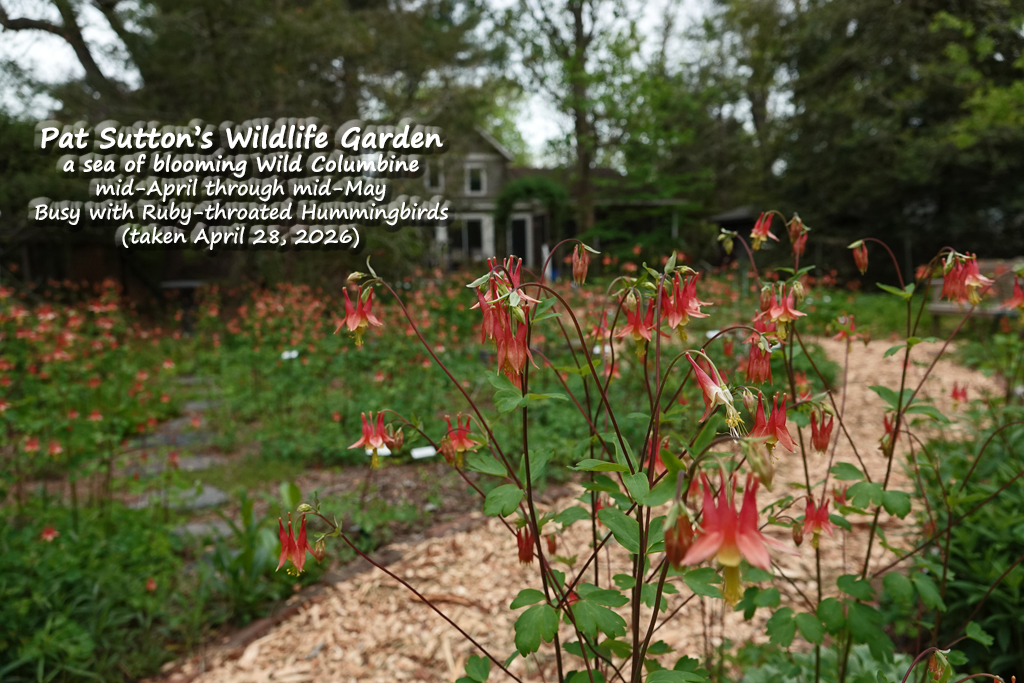
Wild Columbine, Aquilegia canadensis, has wandered all over my garden and woods much to my delight and that of hummingbirds.  In my garden it blooms from mid-April through May.  It is a heavy seed producer, so I collect the seeds once the flower heads dry and scatter them where I want new stands of this hummingbird favorite.

My old-fashioned Coral Bells, Heuchera spp., pull in hummingbirds too.

I’ve planted a Red Buckeye, Aesculus pavia, in my woods that the hummingbirds find irresistible.

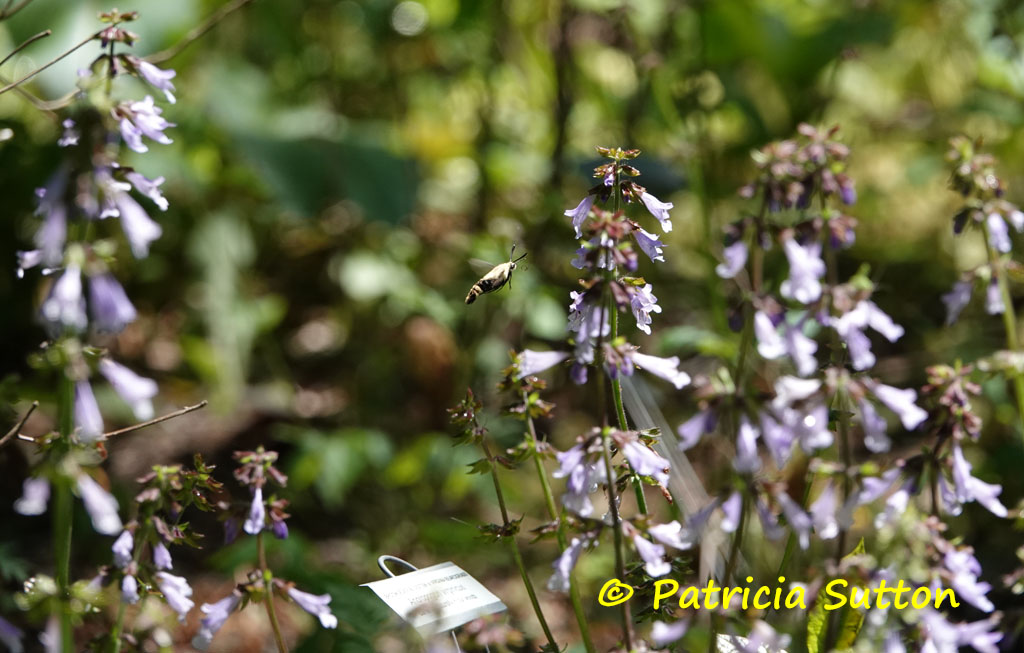
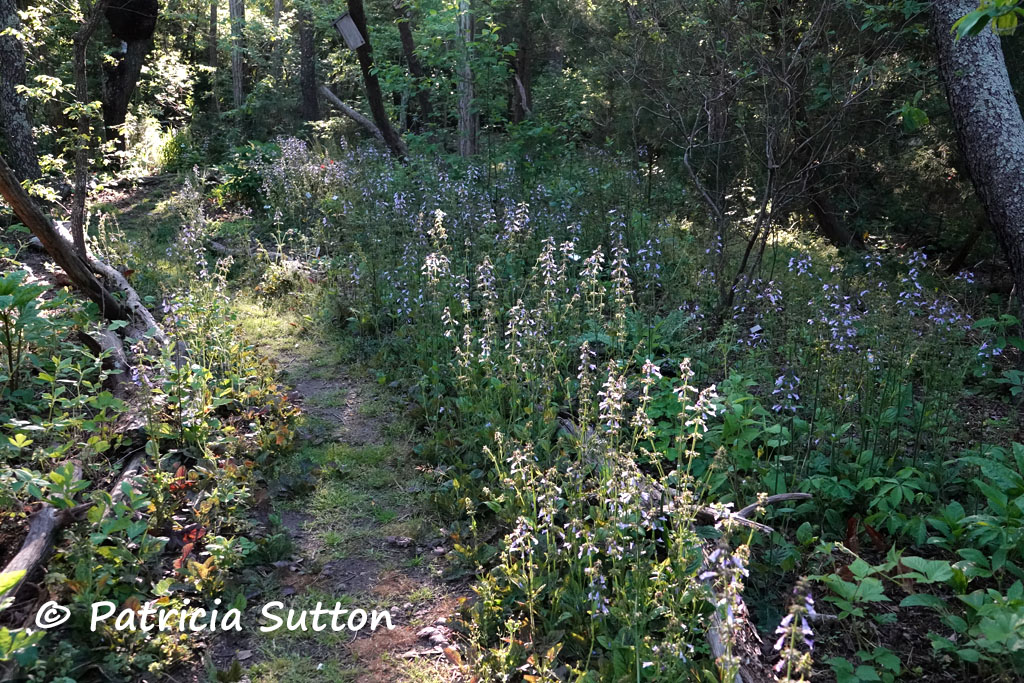
Another hummingbird favorite in the early spring is the shade-loving Lyre-leaved Sage, Salvia lyrata.  It can be quite a seeder, so be careful to plant it where you’d like it to carpet the understory as it has in our woods, much to my delight!Highbush Blueberries and Azaleas are also good spring nectar plants for Ruby-throated Hummingbirds.

In June

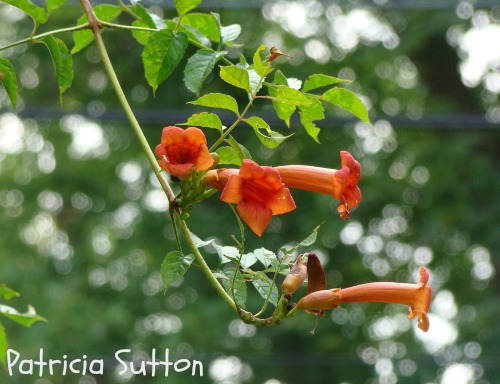
Trumpet Creeper, a native vine that hummingbirds find Irresistible
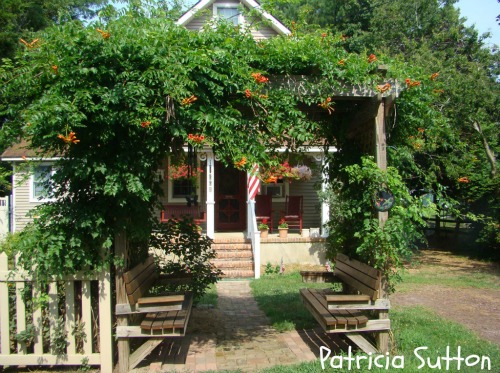
Our sturdy Trumpet Creeper arbor

In mid-June through July, Trumpet Creeper (Campsis radicans), Bee Balm (Monarda didyma), Wild Bergamot (Monarda fistulosa), Foxglove Beardtongue (Penstemon digitalis), Garden Phlox (Phlox paniculata), and Blazing Star (Liatris spicata) all kick in as top hummingbird nectar plants in my garden. Trumpet Creeper, a native vine, can be trained up a dead tree or over a sturdy arbor. There’s nothing more fun than sitting under that arbor and blazing away with your camera as hummingbirds feed and perch, feed and perch, over your head.

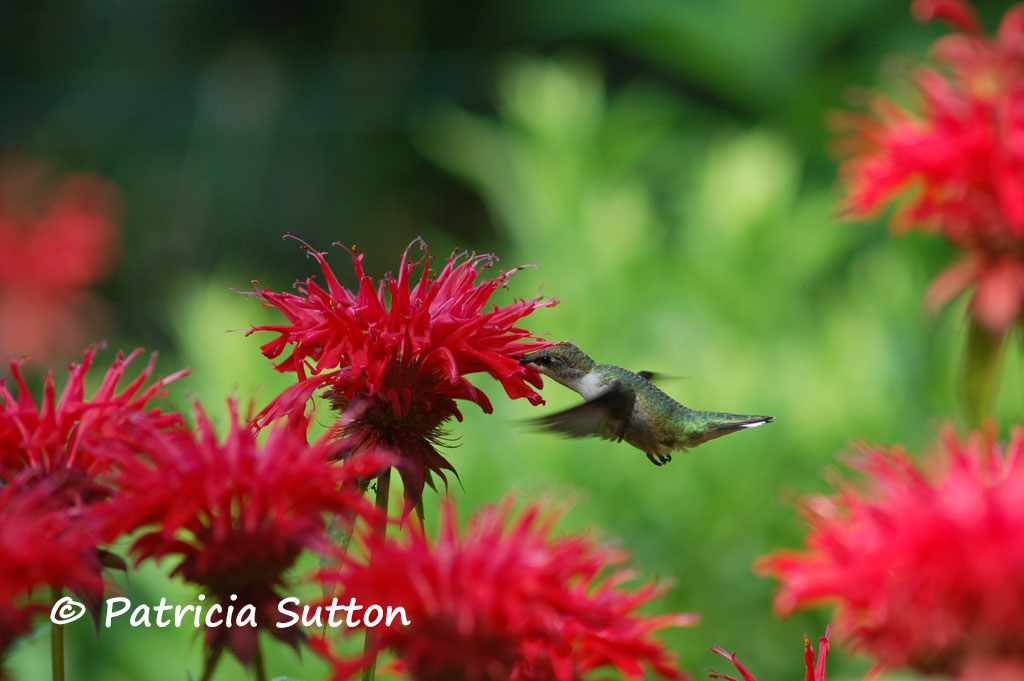
Bee Balm is the plant that led me to wildlife gardening nearly fifty years ago now. It pulls in EVERYTHING, from hungry hummingbirds to hummingbird moths, butterflies, a multitude of bees and wasps, the works! Bee Balm or Monarda is in the mint family and will spread. If you have a patch, share some with a new wildlife gardener and help get them hooked.

With hummingbirds, there is so much to share about these little bundles of energy that I’ll return with additional information in a segment covering mid-summer to late fall.

We hate to see them go, but let’s not think about that right now.  After all it is spring and once they settle in, we will have a solid 5 months of hummingbird madness to enjoy.  

Happy gardening and happy hummers,
Pat

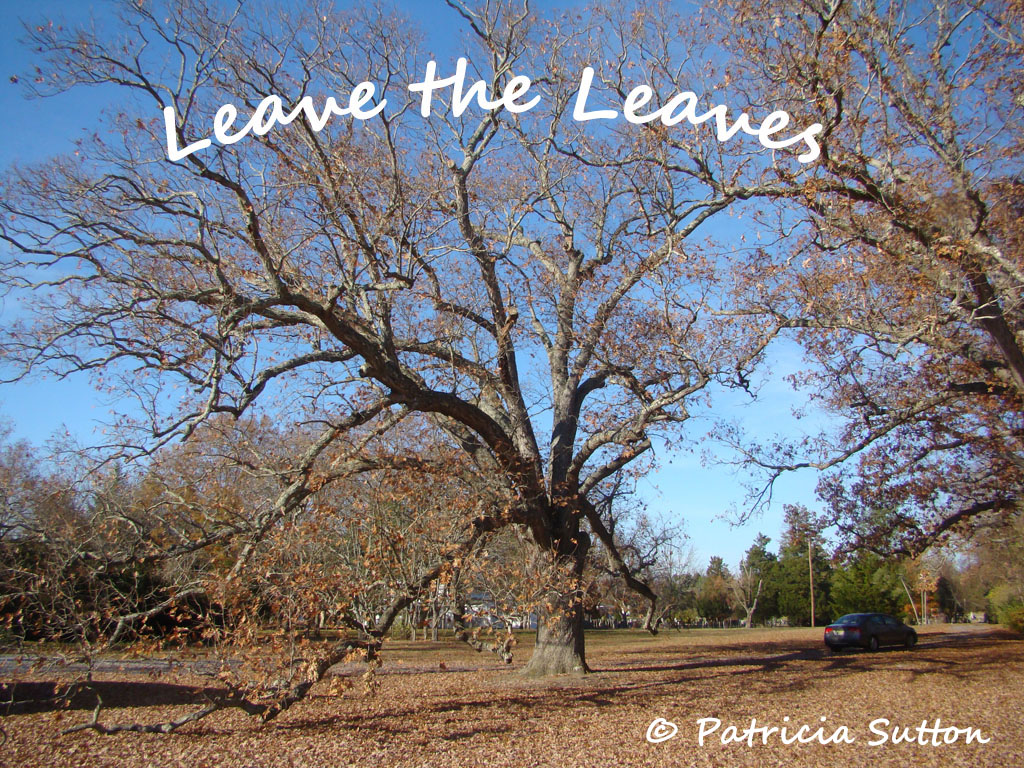
Leave the Leaves

It is common sense to LEAVE THE LEAVES.  After all, no one rakes them up in the wild.  When we walk a nature trail through a natural area, we do not need to fight our way though mountains of leaves, do we ? !  “Let Nature be the Guide,” Larry Weaner‘s mantra, is spot on when it comes to leaving the leaves.

If you like birds, leaf litter is your friend.  Our leaf litter strewn property is a mecca for birds year round, including winter.  We’ve hosted several American Woodcock each winter.  No matter how severe the winter is, they’ve been able to probe down through our abundant leaf litter into the thawed ground under this thermal blanket of leaves and find one earthworm after the next.   Frozen hard, raked bare properties are devoid of feeding opportunities for American Woodcock or American Robins. Too, many normally secretive birds like Hermit Thrush settle in to our yard and are regulars in garden corners with abundant leaf litter.  It is great fun to watch them kick and toss leaves aside to find snack after snack.

I had great fun working on and researching this topic for a program that I’ve given a number of times now.  It has triggered so many “Ah HA!” moments from  audiences and I pray resulted in many more leaves left to do their job.

In this post I have shared the excellent resources that helped me and can help anyone and everyone understand the value of fallen leaves.  Read them, study up, digest the information, value and cherish fallen leaves as much as I do, and join those of us working to educate others.
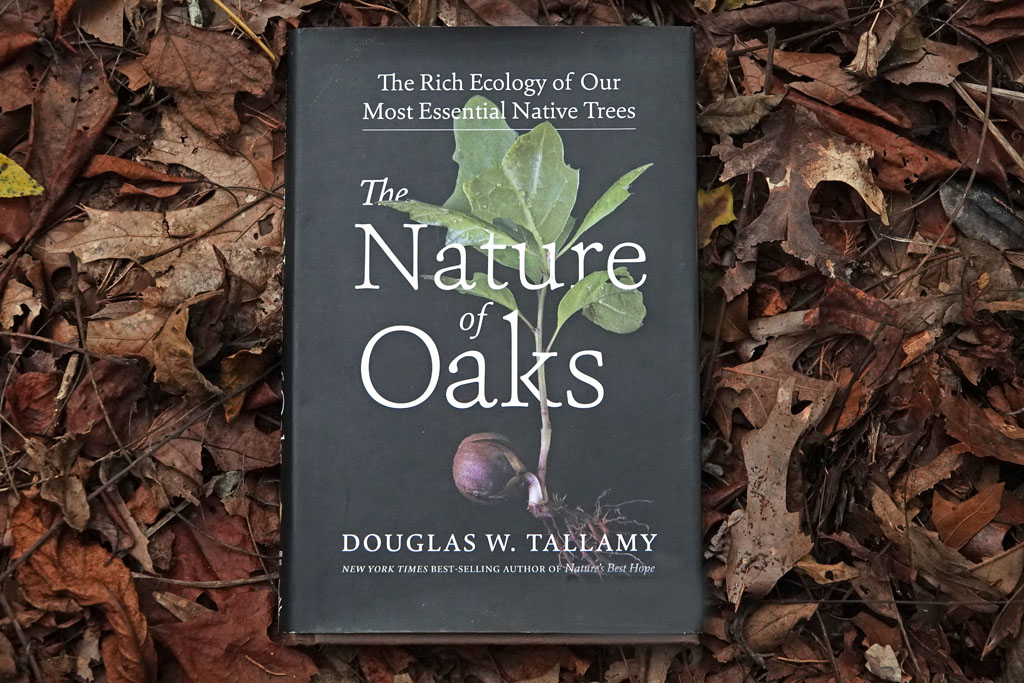
First you’ll want to read Doug Tallamy’s book, The Nature of Oaks.  This book richly covers the benefits of oaks and all their leaf litter.  If you’ve never heard Doug Tallamy speak about this topic, attend a presentation or google “Doug Tallamy Youtube Nature of Oaks” and watch one of his presentations that occurred in your region.  Be sure to listen until the Q&A session when attendees ask the very questions on your mind, like “But, what am I to do with all my Oak leaves?”  “Won’t they kill my grass?”  etc.

My own woods have very few large oaks.  But since we cleared out the invasives (Multiflora Rose and Japanese Honeysuckle) in 2009, many many Southern Red Oaks and 5 Willow Oaks have been planted there by Blue Jays.  Some of these oaks are taller than me now.  I look forward to mountains of oak leaves as these oaks mature.   The deciduous trees and shrubs of my woods include Common Persimmon, Black Cherry, Black Locust, Black Walnut, Sweet Gum, Red Maple, Dwarf Hackberry, Winged Sumac, Arrowwood Viburnum.  These all produce abundant leaf litter, but their leaves break down quickly and by spring I see bare ground.  Doug Tallamy shares that oak leaves take longer than other leaves to break down (3 years) and that is why oak leaves are so beneficial and support so much life!

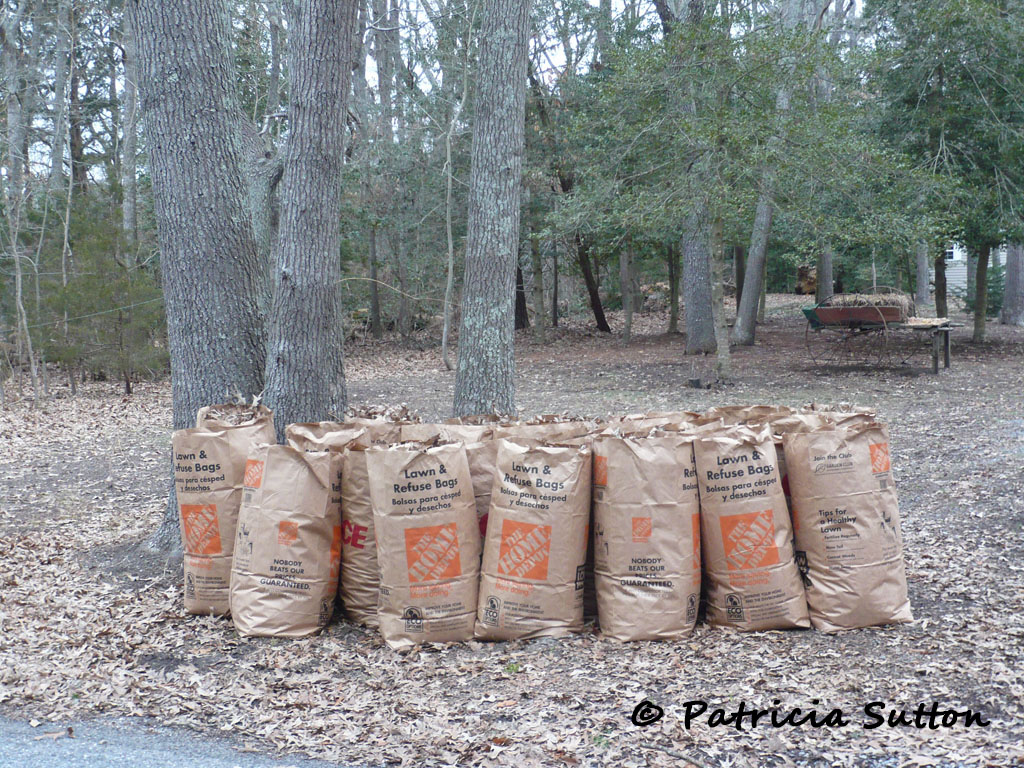
So, each fall between late October and mid November I carve out time to visit cul-de-sacs near me looking for mountains of oak leaves that have been raked neatly to the curb to be carted away like trash.  I take empty trash cans, a rake, and garden gloves.  I can fit 4 trash cans into my car.  Fall of 2025, in 6 runs I collected 24 trash cans of oak leaves.

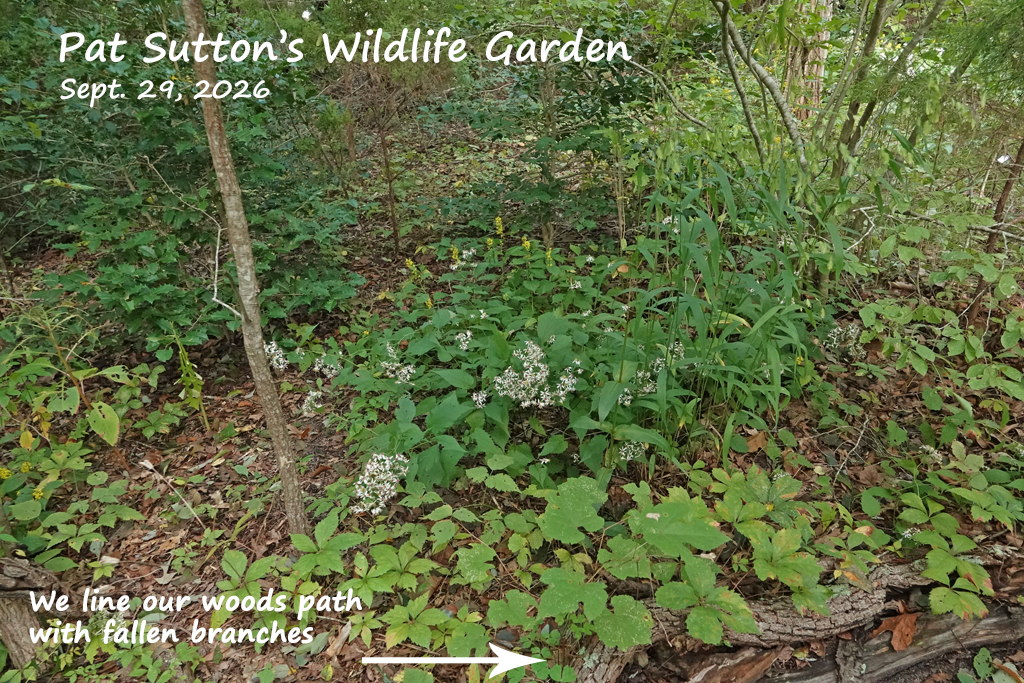
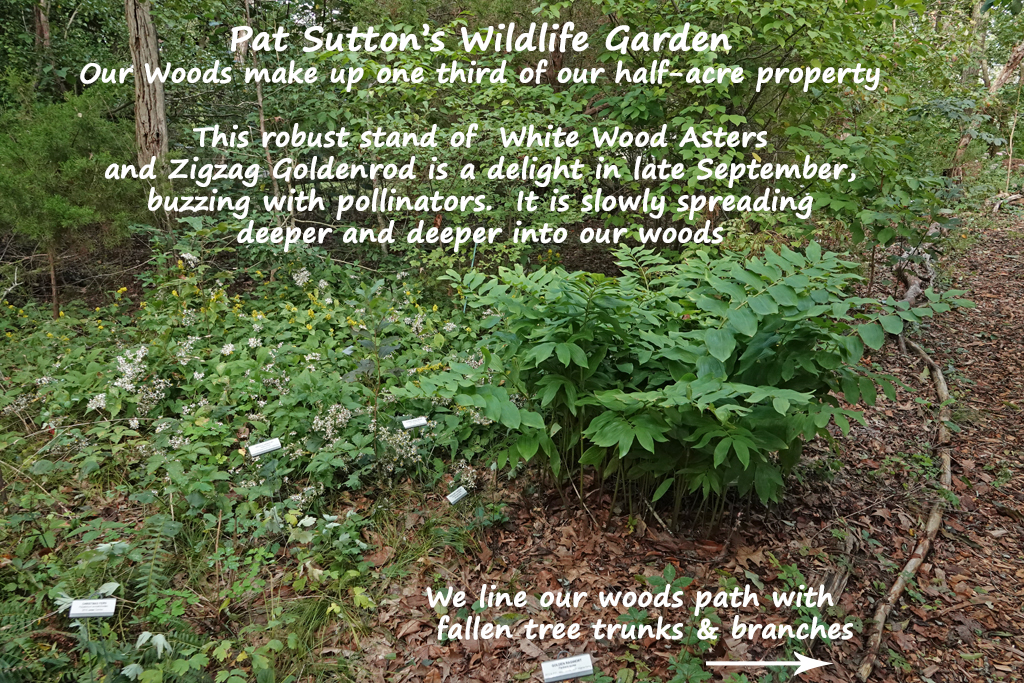
I use these collected oak leaves to bury my woodland spring ephemeral areas with oak leaves.  Since I’ve been doing this I haven’t had to weed my woods in the spring.  My spring ephemerals easily bust through the leaves, while weeds can not.  Too, the many fall-blooming, shade-loving asters and goldenrods that I’ve planted  in my woods have flourished and spread.  It is a win win.

If you like this idea, be cautious and selective; i.e. collect leaves from yards with large oaks and do not collect leaves from yards with problematic invasives that you could be bringing in to your own yard via seed heads.

While you’re at it, read all 4 of Doug Tallamy’s books.  They will change the way you think and act !

Since Doug Tallamy’s first book, Bringing Nature Home, he has shared the top native plants used by butterflies and moths as host plants to create the next generation. Tallamy refers to these plants as the “Keystone Native Plants.”  He has partnered with many other organizations, like National Wildlife Federation, to share Keystone Native Plant information across the country.

For an annotated list of the Keystone Native Plants for your area, go to the National Wildlife Federation Garden for Wildlife website.  Here you’ll find ten different “Keystone Native Plants” Ecoregion handouts (as of November 2025), with others undoubtedly planned. This plant list should be the backbone of your plantings. If you live in southern New Jersey like me, scroll down to “Eastern Temperate Forests – Ecoregion 8″ (which covers nearly all of the East).
Oaks are the top Keystone Native Plant! Then Black Cherry and Beach Plum. Then Willows. Then Birch. And so on. These are the trees that are supporting many, many hundreds of butterfly and moth species. Value these trees and their fallen leaves.

You will have made your trees “Ecological Traps” if you instead rake up the leaves, bag them, and send them away (along with all the life they hold and support).

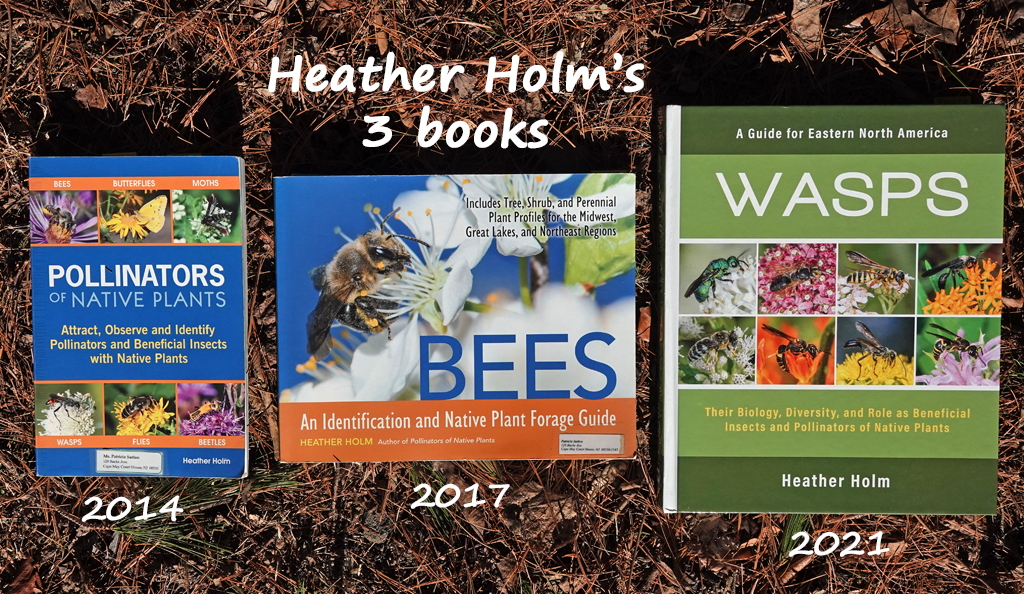
Heather Holm’s 3 books on pollinators of our native plants are beautifully illustrated and packed with natural history information, including where and how our pollinators survive the winter . . . many do so in leaf litter!

Visit Heather Holm’s website and click on the link “Resources” to see her many beautifully illustrated and presented native plant lists, pollinator fact sheets, and posters (many of which are free to download).  These materials will further help you understand life cycles of our pollinators and teach others!

Also on Heather Holm’s website, click on her project “Soft Landings.”  Soft Landings is all about leaving the leaves and planting layers of diverse native plants under Keystone trees and shrubs rather than maintaining lawn that needs to be mowed.  This simple switch to gardening under your keystone trees with shade-loving perennials and understory shrubs provides safe sites where the hundreds of species of butterflies and moths using these Keystone trees and shrubs might complete their life cycle and survive when their caterpillars drop to the forest floor to pupate down in the warmth and safety of the leaves.  The downloadable free poster, “Soft Landings” tells the story beautifully. It should convert kids of all ages (yes, I’m talking about big kids too . . . adults) to leave the leaves where they fall.

You’ll certainly want to read Max Ferlauto and Karin T. Burghardt’s enlightening, fact-filled study, “Removing autumn leaves in residential yards reduces the spring emergence of overwintering insects,” in Science of the Total Environment, March 20, 2025.  Among many other things, they documented that “raking leaves reduced Lepidoptera species (butterflies and moths) richness by 40 % and abundance by 45 %.   You’ll also want to listen to the Margaret Roach (“A Way to Garden”) interview with Max Ferlauto, “Calculating the impact of leaving the leaves.”  (many thanks to Garden Gang member, Carole Tebay, for alerting me to this study and Margaret Roach’s interview)

The Xerces Society’s post, “Leave the Leaves,” is an excellent read addressing those fallen leaves as “free mulch” and  helping to answer questions people have, like whether or not to shred their leaves.  The Xerces Society also sells a very attractive Leave the Leaves SIGN, that might help trigger conversations with neighbors, co-workers, friends, and family, conversations that might help them “get it!” and finally understand.
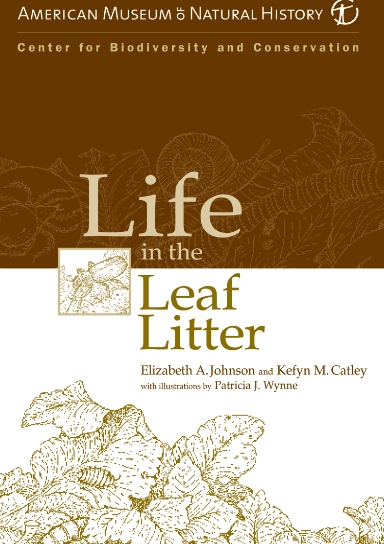
One more excellent resource to better understand why you want to leave the leaves is the booklet “Life in the Leaf Litter,” by Johnson and Catley, published by the American Museum of Natural History and available on their website as a free download.

Shade Gardening in Your Leaf Litter

Once you’ve read all these terrific resources about just how important leaf litter is, begin shade gardening in leafy spaces on your property . . . in under your trees and shrubs (rather than continue to mow these areas) or along a path through your woods.
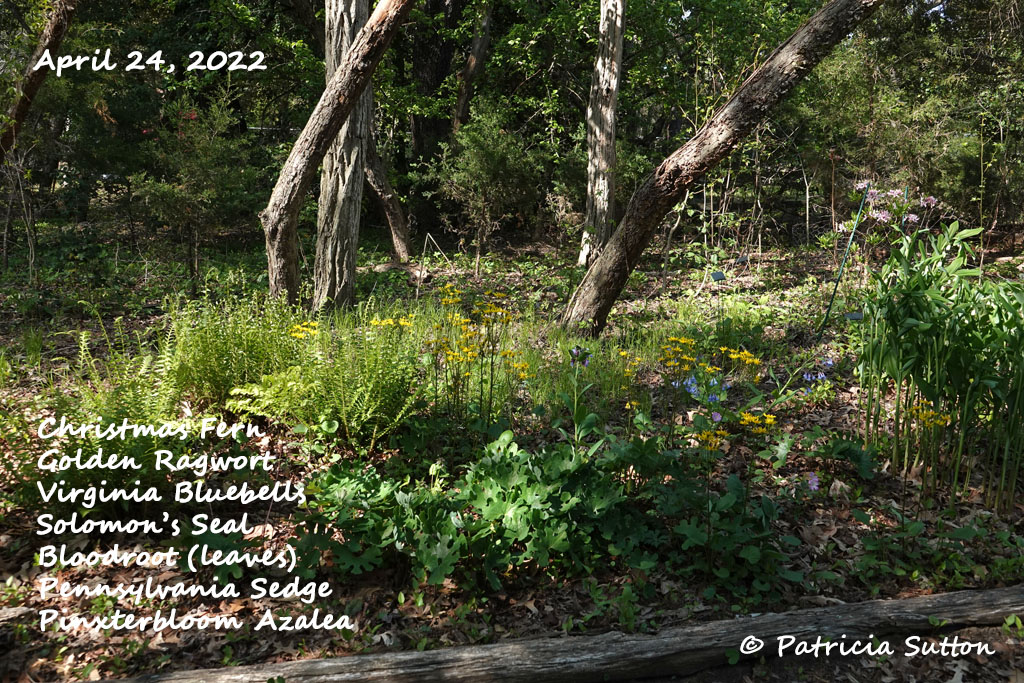
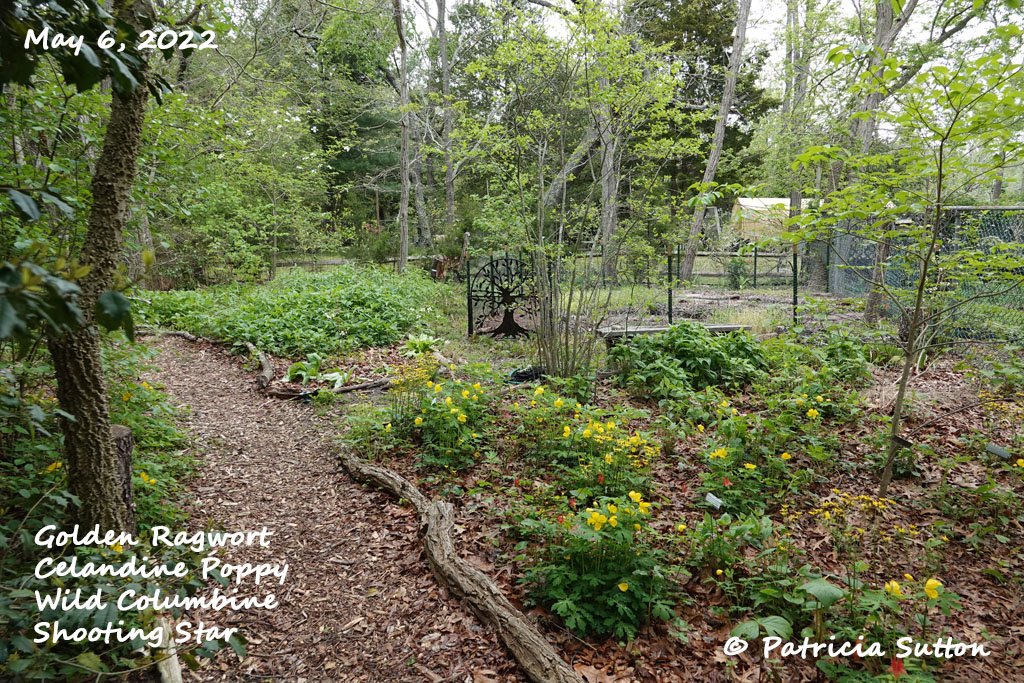
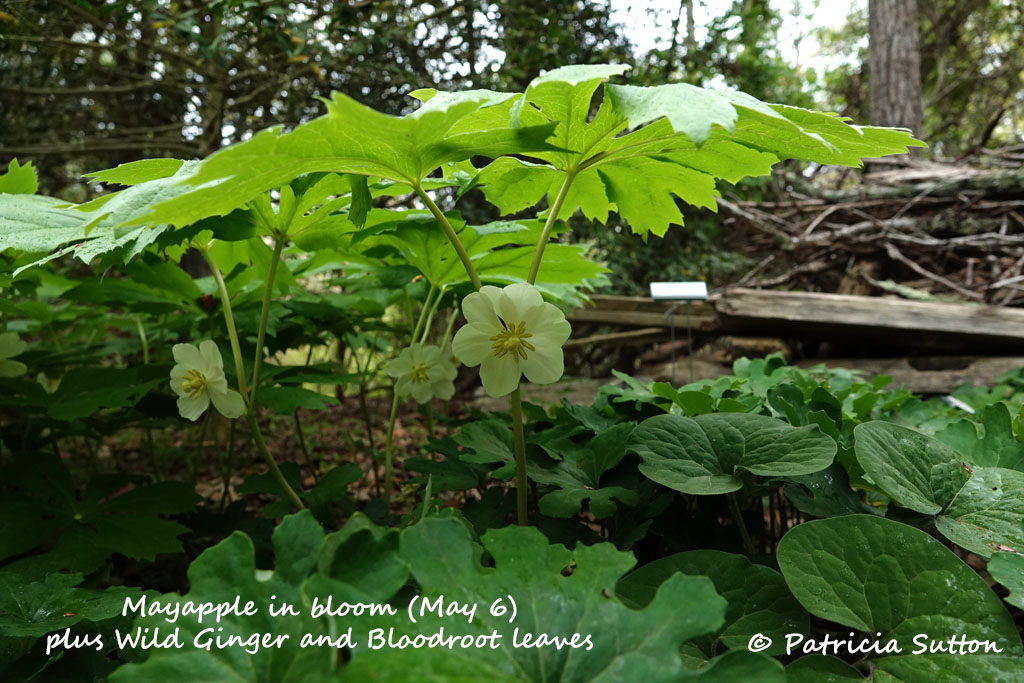
Shade-loving perennials will color your leafy spaces in the early, early spring when spring ephemerals bloom and in the fall when the many shade-loving, fall-blooming perennials bloom.  Through the summer months the fall bloomers will add a lovely layer of green to your leafy areas.
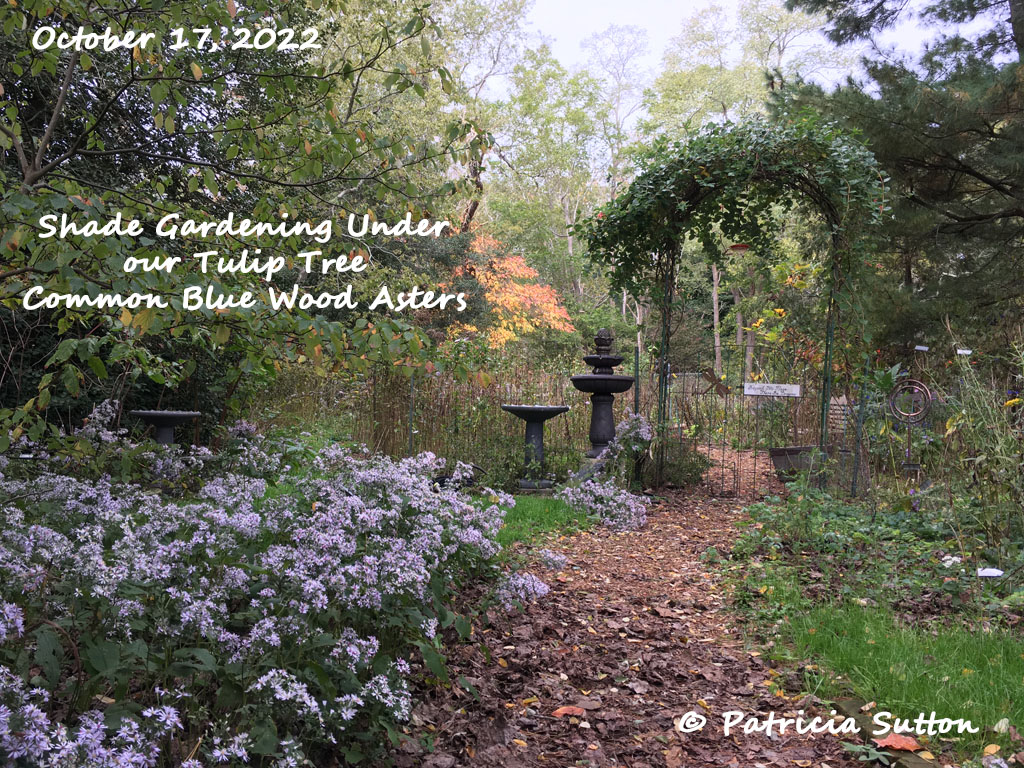
To help you along your way with SHADE GARDENING, go to my resources on this topic and learn what has survived and thrived in my shady spaces.  Remember to use as many Keystone Native Plants as possible!

Now with all the time you have available because you are NOT raking your leaves  (nor bagging them up and sending them away), dive in to all this reading and help convert others to LEAVE THE LEAVES!

I thank you and wildlife (fireflies, bumble bees, so many butterflies & moths, etc.) thanks you!!!

As I mentioned, I have an information-rich program on this topic that is illustrated with beautiful photos of so much wildlife that benefits from abundant leaf litter.  If you’d like me to share it with your group via ZOOM, contact me by replying to one of my Garden Gang alerts.

If you have any comments, I’d love for you to be able to leave them in the “Comments” box at the end of the post. But unfortunately, that part of my website is no longer working.  Go Daddy just told me I needed to sign up for their $80/month “Word Press Premium Support” to resolve that.  Jeeeeeeeeeezzzzzzzzz . . . one more expense I can not afford.