FREE LOAD of Wood Chips (Cape May County residents)

Hi Gang,

For years we have gone to Dave Parker’s company, Treeworks, when we need arbor work. And for many of those years, they have generously dumped a LOAD of fresh wood chips for us when we need to refresh our wildlife garden path.

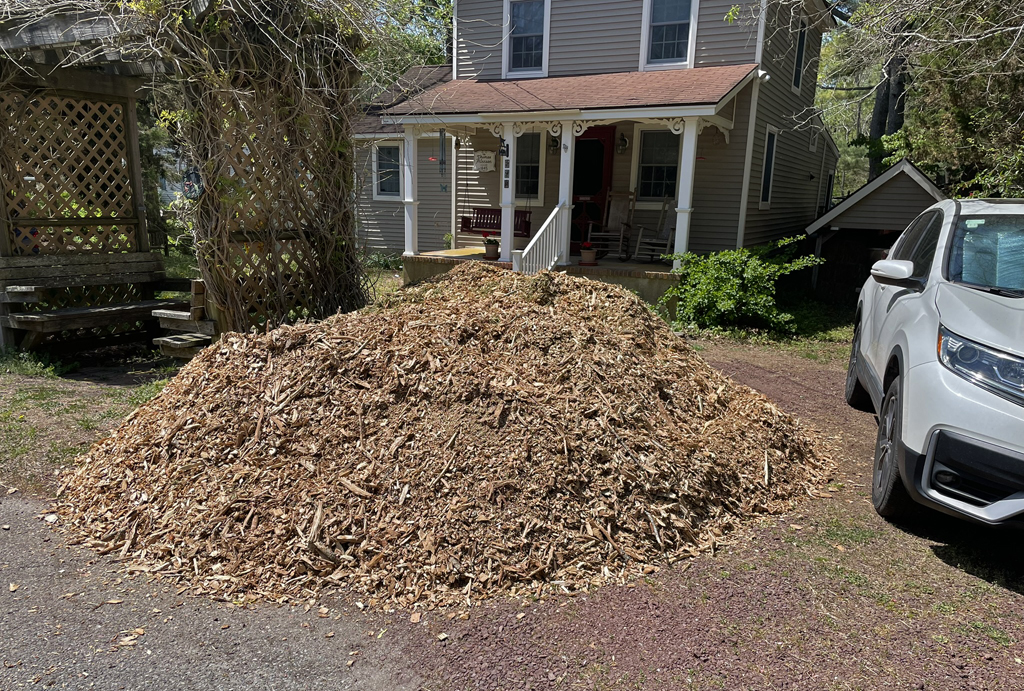
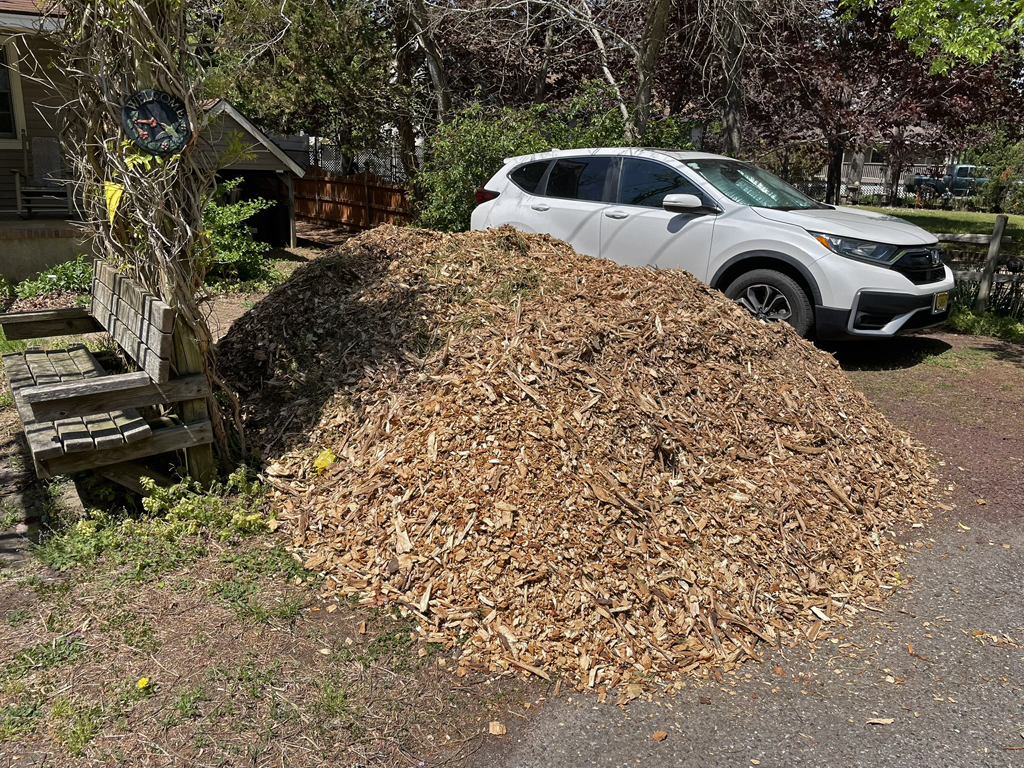
Every 3-4 years our wood chip paths turn to rich soil and sprout so many plants that we need to scoop up that lovely soil and replace it with fresh wood chips. Yesterday, Treeworks kindly dumped a LOAD of FREE Wood Chips for us to do just that!

Our partial LOAD yesterday (the truck was not totally full) was about 5-6 cubic yards of wood chips.   Here are photos of our free LOAD of Wood Chips.

When talking earlier this month with Dave Parker to learn when his crew would be in Cape May County, NJ, and when they might have a load of fresh, unadulterated wood chips for us, he shared that if others would like to make a similar arrangement, they should call his office.  Details follow.

Please understand that Treeworks can not deliver small amounts of wood chips . . . we are talking a LOAD, a truck full, or a truck partially full.  Maybe you don’t need a full LOAD of wood chips, but maybe you have a friend or two to share them with. So, consider having the load dumped at one of your homes, and all of you interact and benefit from these free wood chips.

FREE WOOD CHIPS

Call TREEWORKS office
609-463-8733

Ask to be put on the list
for a load of Wood Chips
Share your name, contact info,
& snail mail address
(i.e. where you want the
load of wood chips delivered)

Don’t expect them in a day or a week,
but they will come through for you!

When they are delivered
we’ve always tipped the delivery person
as a thank you!

Happy Wildlife Gardening,
Pat

Native Plant Sales in Cape May Co., NJ, 2026

Hi Gang,

I am delayed this year getting my 2026 update done and posted on my website, but in the meantime, please go to my 2025 list of “Some Sources of Native Plants,” check each near you that you like to frequent (either their website or with a phone call) and don’t miss their spring offerings!

I recently learned of an Open House Plant Sale Heidi Hanlon is having, so have included those details below for upcoming native plant sources and sales here in Cape May County, NJ. Mark your calendar and do not miss these great opportunities! Details follow:

NJ Audubon’s 2026 Spring Native Plant Sales on Sat., May 2nd, 10 am – 4 pm, will occur at 3 NJ Audubon Centers. Get there early for the best selection; first come first served. Check website for full details & plant lists. Left over plants are available for sale afterwards.

  • Nature Center of Cape May (NCCM), 1600 Delaware Ave., Cape May, NJ 08204 (Cape May Co.); 609-427-3045; nccm@njaudubon.org
  • Lorrimer Sanctuary, 790 Ewing Avenue, Franklin Lakes, NJ 07417 (Bergen Co.); 908-481-4090; lorrimer@njaudubon.org
  • Scherman Hoffman Sanctuary, 11 Hardscrabble Rd, Bernardsville, NJ 07924 (Somerset Co.); 908-396-6386; shws@njaudubon.org.

Flora for Fauna Nursery is open by appointment ONLY, but owner Karen Williams hosts a number of Open House Sales each year at 1209 Freidriechstadt Ave, Woodbine, NJ 08270 (Cape May Co.); 609-442-3747; flora4fauna@verizon.net. Her 1st two Open House Sales of 2026 will be April 23-25 (Thurs. – Sat.) and May 7-9 (Thurs. – Sat.) from 9 am to 3 pm. Follow “Flora for Fauna” Facebook page for plant lists (posted on April 19th), payment options, and future sale dates.

Dustin & Brittany Welch, The Wildlife Gardener, offer an assortment of native plants for retail sale and also offer habitat design. Their first 2026 pop-up sales follow: May 1-2 (Fri.-Sat), May 15-16 (Fri.-Sat), June 5-6 (Fri.-Sat) with Fri. Happy Hour Sales from 5-7 pm, and Saturday hours from 9 am – 1 pm at 14 Woodland Road (off Goshen Rd), Cape May Court House, NJ (Cape May Co.); TheWildlifeGardenerNJ@gmail.com. April 20th they posted a list of plants that will be available (payment options, etc.) at these spring sales on their “The Wildlife Gardener” Facebook page. If these times do not work for you, they also welcome private sales by appointment. Follow their facebook and Instagram page for sale dates, times, plant lists, and payment options.

Heidi Hanlon grows native perennials, shrubs, and trees that benefit wildlife. Heidi shared on her “Wild About Plants at Heidi’s Acre” Facebook page that she will have an open house plant sale on Fri. & Sat., May 15 (6 – 8 pm) and May 16 (8 am – 2 pm) at 24 Cardinal Drive (off Rt. 47 near mm 13), Cape May Court House, NJ. See her facebook page for the plants she will have available on these sale days. The plants will be in the driveway and on display for purchase during these times. Plants are also available throughout the growing season by appointment. You can let me know what plants you are interested in schedule a pickup time. hjhanlon@yahoo.com . Used garden pots welcomed.

Goshen Gardens (Nursery), 570 N Delsea Dr, Cape May Court House, NJ 08210; 609-778-4075 (Cape May Co.); goshengardensnj@gmail.com. 2026: SPRING & SUMMER hours: May 9 – July 26: Saturdays & Sundays (9:30 am – 3 pm). If weekends do not work for you, call for appointment. CLOSED AUGUST. FALL hours to come. See website for details & hours. Nice selection of native trees, shrubs, vines, perennials, and non-native “Chocolate Cake” annuals (Zinnia, etc.). They only sell what they grow and all plants are pesticide free.

Happy Wildlife Gardening,
Pat

Monarch Garden Tours: Sept. 19, 20, & 21

sm-L1060150-w-sig
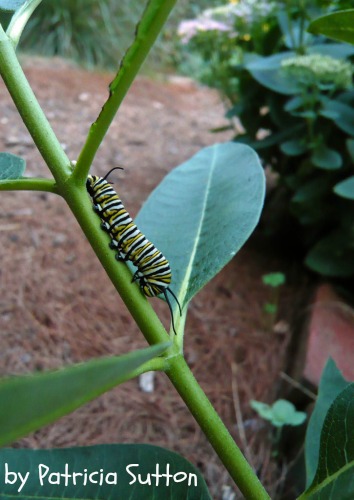
Monarch caterpillar on Common Milkweed in Pat Sutton’s garden August 25, 2014

At the peak of Cape May County’s world-famous fall Monarch migration, tour diverse gardens that have hosted Monarchs since May. Each features native nectar plants and as many as five different kinds of milkweed (used by Monarchs for egg laying to create the next generation). Expect Monarchs and other butterflies, Monarch eggs, caterpillars, and maybe even a chrysalis. The complex Monarch migration will be both explained and enjoyed.

I’ve worked with 18 garden owners to line up this set of Garden Tours.  Don’t miss this opportunity to see a fine selection of wildlife gardens with lovely stands of MILKWEED: Common Milkweed, Swamp Milkweed, Butterfly Weed, Whorled Milkweed, Purple Milkweed, and Tropical Milkweed. The annual, Tropical Milkweed, will be in bloom.  Most of our native perennial milkweeds have already bloomed, but their robust leaves still pull in mating and egg-laying Monarchs well into the fall, as our local Monarchs create yet another generation. These gardens are coming into their fall attire, which will be as stunning as the summer garden, yet completely different.

2014 TOURS OF PRIVATE MONARCH GARDENS

10:00 a.m. to 3:30 p.m.

Friday, Sept. 19 — Mid-County Tour, including amazing gardens along the Delaware Bayshore in North Cape May and Villas
Saturday, Sept. 20 — North Tour, including Pat Sutton’s garden and other gems from Cape May Court House north to South Seaville
Sunday, Sept. 21 — South Tour, including gardens south of the Cape May Canal

Expect these gardens to also be hosting lingering hummingbirds, butterflies, caterpillars, stunning native plants, and undoubtedly some surprises. Fall migration will be underway, so anything’s possible.

TOUR DETAILS AND PRICING

Gardening naturalist and author, Pat Sutton, leads these tours, which include her own garden in Goshen (North tour). Bring lunch since the group will eat in one of the gardens.
Limit: 25 per tour.
Three Tours / Cost per tour: $35 members (NJ Audubon), $45 nonmembers.
(Join three tours at a discounted rate of $90 members, $115 nonmembers.)
These tours require preregistration with payment.

Registration: you may register by phone at 609.898.8848 with a credit card or send payment to the Nature Center of Cape May, 1600 Delaware Avenue, Cape May, NJ 08204 (noting which tours and full names, addresses, and phone numbers of registrants).  NCCM reserves the right to cancel programs, and refunds are available only if NCCM cancels the event. Walk-ins are welcome on a space-available basis. Become a member of NJAS and receive discounts in the gift shop and on many programs.


Hummingbird Garden Tours: Aug. 15, 16, & 17

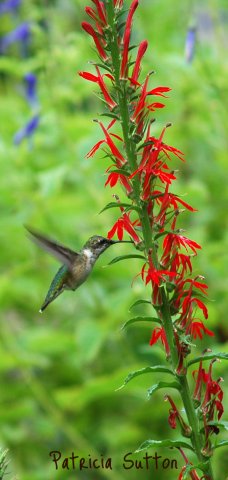
Cardinal Flower w-Ruby-thHummingbird by Patricia Sutton


It is the peak of Ruby-throated Hummingbird migration.  Numbers have exploded now that young have left the nest, females are busy with second broods, and hummingbirds that nested in the far north (Gaspe Peninsula) are moving south.  Gardens designed and planted with hummingbird-friendly plants and a wealth of yummy soft-bodied insects (which hummingbirds also love to eat) are experiencing a virtual blizzard of hummingbirds.

Pat Sutton has worked with 18 garden owners to line up a set of Garden Tours not to be missed!


2014 Tours of Private HUMMINGBIRD Gardens           10 a.m. to 3:30 p.m.

Friday, August 15: NORTH “Goshen to Dennisville”

Saturday, August 16: SOUTH “Cape Island”

Sunday, August 17: MID-COUNTY “North Cape May to Rio Grande”

At the peak of Ruby-throated Hummingbird migration, we’ll savor an array of diverse gardens that have hosted nesting hummingbirds since May and are now drawing in dozens of migrants. Native nectar plants, healthy insect populations, water sources, and adequate cover are key elements of each garden.

TOUR DETAILS AND PRICING

Gardening naturalist and author, Pat Sutton, leads these tours, which include her own garden in Goshen (North tour). Bring lunch since the group will eat in one of the gardens.

If some of you are keen to create a butterfly & hummingbird garden, be sure to download the article & plant list Sutton wrote / created:

Limit: 25 per tour.
Nine Tours / Cost per tour: $35 members (NJ Audubon), $45 nonmembers.
(Join three tours at a discounted rate of $90 members, $115 nonmembers.)
These tours require preregistration with payment.

Registration: you may register by phone at 609.898.8848 with a credit card or send payment to the Nature Center of Cape May, 1600 Delaware Avenue, Cape May, NJ 08204 (noting which tours and full names, addresses, and phone numbers of registrants).

NCCM reserves the right to cancel programs, and refunds are available only if NCCM cancels the event. Walk-ins are welcome on a space-available basis. Become a member of NJAS and receive discounts in the gift shop and on many programs.

Painted Lady Explosion – September 2012

We were away in South Carolina running two butterfly counts (in their 20th year – a whole other butterfly-rich story to tell).  Upon our return on August 29th, we found our garden swimming in Painted Ladies.  We tallied 21, far more than we’d ever seen in our garden before.

Painted Lady and American Lady ID is a puzzle to many. These photos should sort it out for you.

To give you a feel for just how unusual this was, we never saw a single Painted Lady in our garden in 2011 and only 9 in 2010.

Much to our amazement, numbers steadily rose each day: 35 on August 30, 54 on August 31, and  70 on September 1.  Numbers held  steady at 70 for a few days, then shot up to 106 on September 5.  Clouds of butterflies lifted, scattered, and settled back on blooming Sedum and other plants as we slowly and reverently walked through our magic garden.

We were told there were thousands of Painted Ladies at lands end, Cape May Point.

A cold front hit on September 6, bringing rain and “raining” migrant songbirds.  Our garden filled up with hungry Common Yellowthroats and other warblers and flycatchers.  They feasted on butterflies and moths and the wealth of other pollinators in the garden.

Since then Painted Lady numbers have slowly nudged back up to 60.  Not the 106 of September 5, but still a sight to behold.  It’s quite magical as they lift off, scatter, and settle back on blooming Sedum when we walk through the garden.  Throughout all this there have been small numbers of the normally more common American Lady mixed in.

Funnily enough one of our Leopard Frogs has decided that the feasts to be had in the garden are far more desirable than the feasts to be had in the pond. Several times now we’ve found this opportunistic Leopard Frog nestled down in the sedum patiently waiting for an easy snack.

Opportunistic Leopard Frog patiently waiting for its next meal

Can’t wait to see how the rest of the fall of 2012 unfolds.

Painted Ladies were formerly called “The Cosmopolite” because they are found on every continent (except Antarctica).  Yet, they can not tolerate freezing temperatures in any form (as an egg, caterpillar, chrysalis, or adult).  They safely winter on the Mexican Plateau (northern and central Mexico) each winter.  By spring they begin to repopulate the US from Mexico.  Some years their numbers here in the East are nonexistent, other years very low, and every now and then their numbers are good.  But in our 35+ years of watching butterflies and gardening for them, we’ve never seen explosive numbers like these!  Robert Michael Pyle shares in his book, the Audubon Society Field Guide to North American Butterflies, that these drastic fluctuations from year to year are due to a variety of factors: cycles of parasite attack, caterpillar plant defoliation, and / or superabundance of nectar following heavy winter rains.

Red Admiral MEGA Migration, May 2012

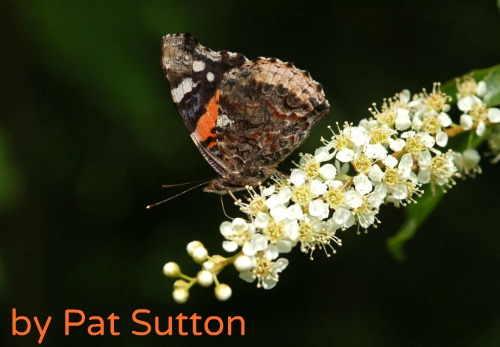
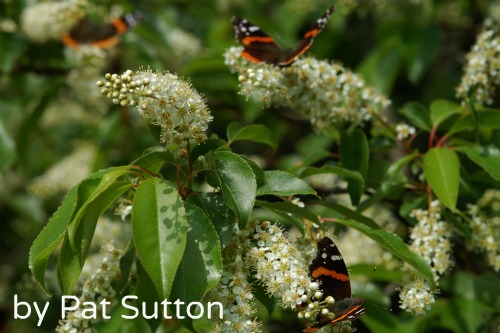
Red Admirals nectaring on Black Cherry blossoms, 5-4-12

Hi Gang,

I’ve had lots and lots of wildlife gardeners all over New Jersey and the Northeast share their Red Admiral sightings with me.  Hopefully you saw some of this mega flight yourself, involving many millions of Red Admirals, so many that cars everywhere couldn’t help but hit hundreds (or probably thousands) of them some days.

PinkLady-Slipper
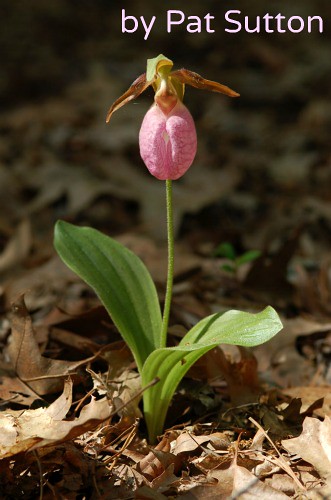
Pink Lady-Slipper, 5-1-12

My fist awareness of the MEGA Red Admiral movement was on May 1st, the day we returned from presenting a program to Chesapeake Audubon Society in Maryland.  Our lilacs were covered with them.  We’d just learned that Pink Lady-Slippers were blooming, so visited a woods along Kimbles Beach Road in the Cape May NWR to see them and were astounded by the 100s of Red Admirals (and lesser numbers of American Ladies, Question Marks, and Painted Ladies) pouring out of the woods, all dashing north.  That evening I drove to Wildwood on an errand and the flight continued the entire length of my drive . . . I saw 100s of Red Admiral pouring north everywhere along the way, so many that I couldn’t help but hit my fair share of them.

RedAdmiral (1)
Red Admiral on Black Cherry blossom
Red Cedar.jpg
Ancient Red Cedar, 8′ 7″ around

May 3rd I stopped what I was doing (preparing for a “Backyard Habitat for Birds, Butterflies, Dragonflies, and More!” workshop) to drink in the explosion of Red Admirals nectaring on Black Cherry trees.  I’d never seen anything like it and could only compare what I was seeing to a butterfly house (where 100s or 1000s of butterflies are raised and released every day into an enclosed butterfly house to entertain visitors).  The numbers on each blooming Black Cherry tree were off-the-charts.  Every few seconds 100s exploded out of the tree, to land again and continue nectaring.  The tree seemed alive with Red Admirals.  It was hard to capture on film, so I focused on some portraits of nectaring Red Admirals and Question Marks and American Ladies.  I had to pull myself away to get back to work.

May 6th I visited Cape May NWR woodlands on Kimbles Beach Road to show a friend an enormous Red Cedar I’d found (8′ 7″ around at chest height), a real big’n.  It was about 10:00 a.m. and we saw a few Red Admirals flitting about.  But when we entered the woods it was like entering a magic woodland, in that every sunlit patch of the forest floor was covered with 20-40 Red Admirals (and lesser numbers of Question Marks and American Ladies) that lifted off the forest floor, sailed around, then settled back down onto the forest floor to warm up for the day.  We ended this visit by driving the road out to the Delaware Bay shoreline and were dazzled by another natural history show unfolding, 100s of  Horseshoe Crabs tumbling in the tideline, mating.

Horseshoe Crabs
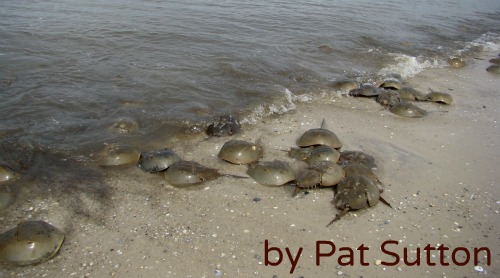
Horseshoe Crabs mating in tideline of Delaware Bay, 5-6-12

May 8th I was interviewed by Phaedra Laird of NBC 40 WMGM-TV and her cameraman, wanting to learn of the Red Admiral migration.  Numbers had dropped off.  The Black Cherry trees were still in full flower, but Red Admirals were not in attendance.  But our Stinging Nettle patch was another story. I’d dared to plant it in our wildlife garden, just for Red Admirals.  I was able to point out Red Admiral eggs on the leaves of my Stinging Nettle.  The more I looked, the more I found, until I realized that the patch supported 100s and 100s of eggs.  Several female Red Admirals were in attendance, laying more, one after the next.   We peeked inside a curled-shut leaf and found a teeny-tiny Red Admiral caterpillar.

Rick Cech and Guy Tudor’s great book, Butterflies of the East Coast, An Observer’s Guide, shares the following really cool natural history information.  Red Admirals withdraw from the North each fall and maintain thin, permanent resident populations from the Carolinas south.  They steadily repopulate the north every spring, but this movement north usually goes unnoticed.  Though about once every 10 years, massive spring flights on the East Coast have been documented: 1981, 1990, 2001, and now 2012.  This year’s MEGA flight could be due to the mild winter where many more Red Admirals survived the winter to mate and lay eggs and grow in number until this explosion north.

RedAdmirals(3)
A blizzard of Red Admirals on Black Cherry tree blossoms, 5-4-12

Looking back at my notes from the May 5-8, 1990 flight Clay reminded me that we’d found 100s washed ashore along the ocean front, individuals that had been blown offshore and never made it back to land.  Let’s hope that this flight has not triggered something similar.

Jack Connor has compiled many observations and counts tallied by naturalists all over South Jersey of this MEGA May 2012 Red Admiral spring migration.  Go to his South Jersey Butterfly Blog to read these fun accounts: as of May 7 and as of May 5.